Mobile App Design, Design System, User Research
iCarSuite Mobile App: Turning Mobile into a Revenue Channel
COMPANY
iCarAsia (Part of CARSOME Group)
DURATION
Aug 2025 – Nov 2025
TEAM
1 Senior Product Designer (me), 2 Junior Designers, 1 Lead Designer, 1 Product Manager, 2 Developers, 3 QAs
TL;DR
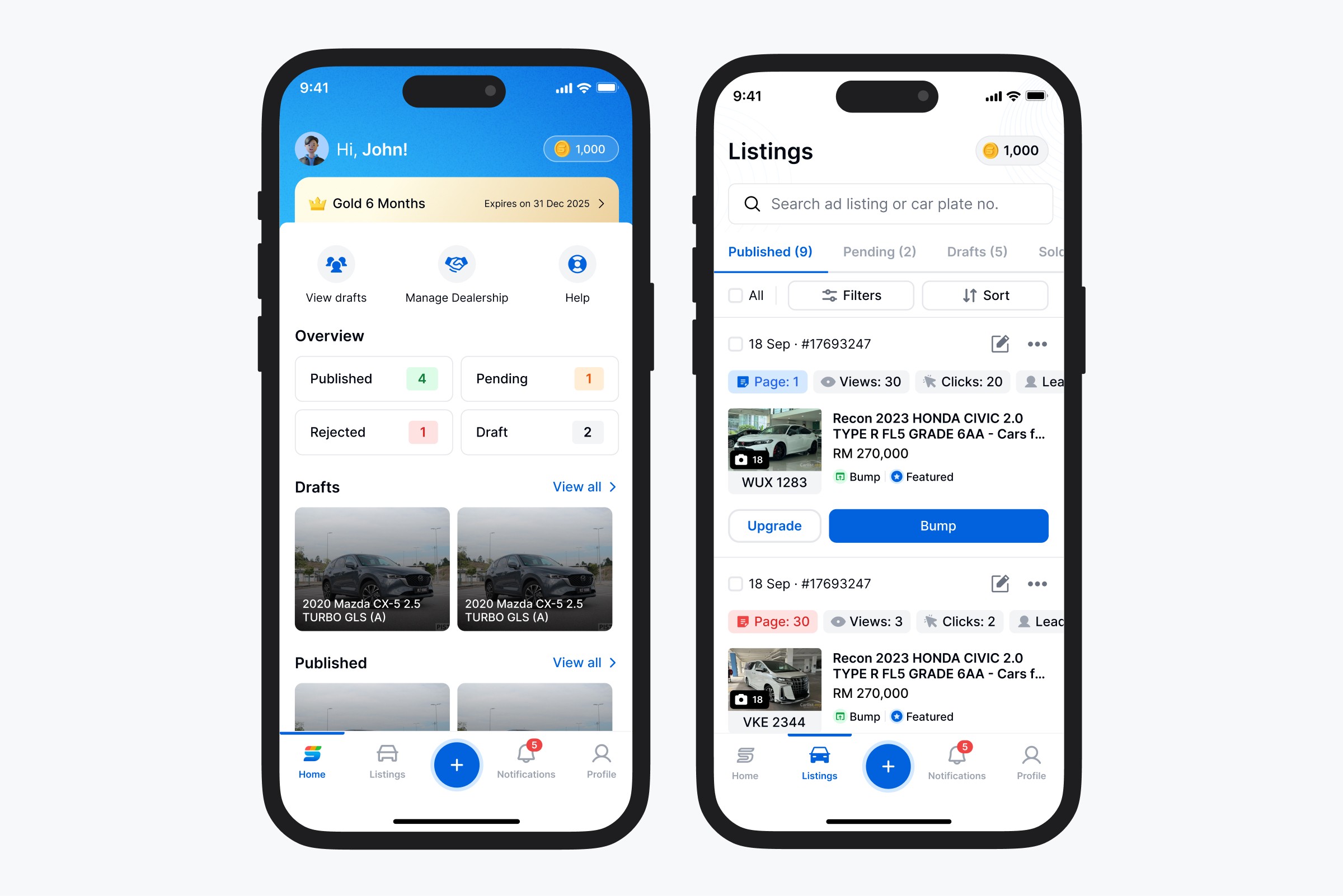
Used-car dealers spend most of their day away from a desk, yet critical workflows in iCarSuite still required a desktop computer. I led the redesign of the mobile app experience, transforming it from a neglected companion app into a platform dealers could use to manage listings, leads, and ad performance on the go.
The challenge was balancing familiarity with the existing web platform, supporting three markets with different business models, and improving adoption of revenue-generating products.
Within 3 months of launch, the app generated 6,500+ ad upgrade purchases, validating mobile as a meaningful revenue channel.
Jump to Solution
View all
CONTEXT
iCarSuite helps automotive dealers manage inventory, leads, and listing visibility.
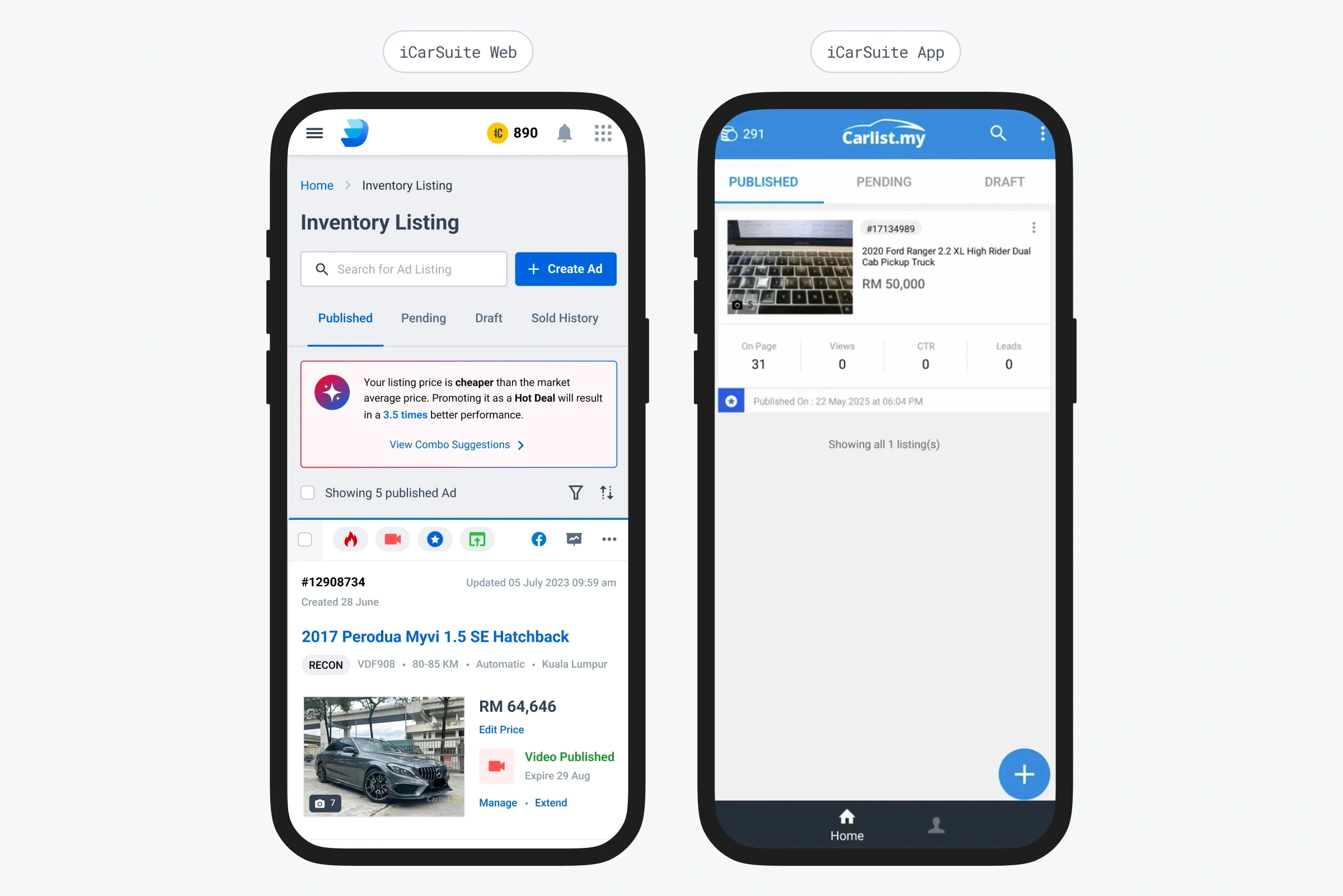
While a mobile app already existed, years of web-first development had left it behind, forcing dealers to switch back to desktop to complete critical tasks.
MY ROLE
Sole Senior Product Designer leading the 0→1 redesign of iCarSuite's dealer mobile experience.
I drove discovery, defined the product direction, and partnered with stakeholders across product and engineering teams to deliver a scalable solution across three markets. Alongside hands-on design work, I mentored junior designers and guided implementation through launch.
RESEARCH
Rather than redesigning from scratch, we aligned on a simple principle: retain proven web patterns where they worked, while adapting workflows where mobile introduced new opportunities or constraints.
To understand where those opportunities existed, I conducted dealership visits, heuristic evaluations, and competitor analysis across leading dealership platforms.
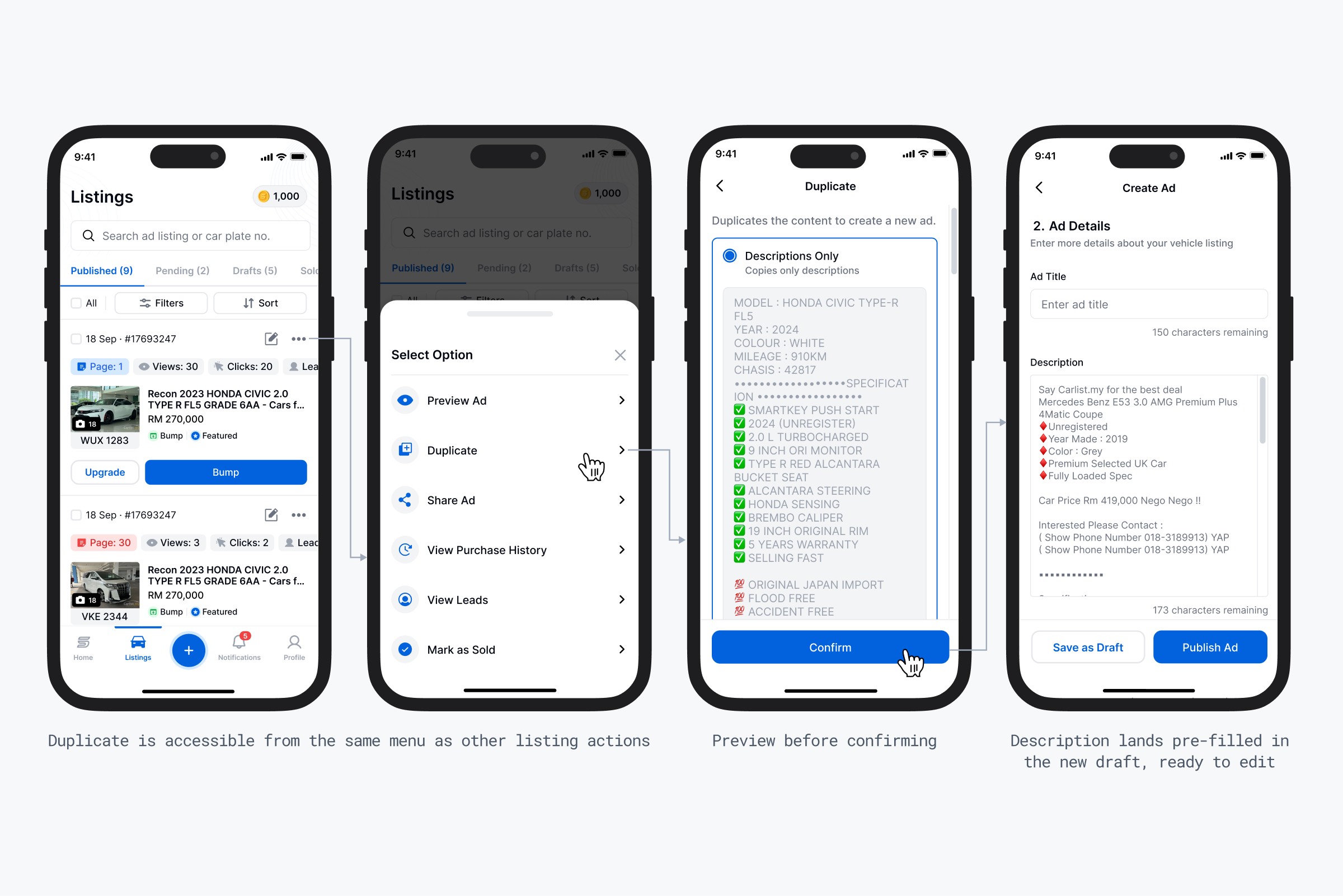
Observation revealed opportunities that interviews didn't. During one dealership visit, I watched a sales agent search through old Notes and listings to recreate content that already existed elsewhere. That observation directly led to a listing duplication feature, eliminating a workaround dealers had come to accept as normal.

INSIGHTS
Research revealed 3 recurring patterns:
01.
Dealers value control over automation
Many dealers had developed their own rituals around promoting listings. They wanted faster ways to execute the strategies they already trusted.
02.
The workflow extended beyond iCarSuite
Dealers moved between Lightroom, Notes, WhatsApp, and iCarSuite to create and manage listings. The problem wasn't a single screen; it was an ecosystem of disconnected tools.
03.
Dealers trusted outcomes more than analytics
Most evaluated performance through incoming leads and listing visibility rather than traditional dashboard metrics. This challenged many of our assumptions about what information mattered.
KEY PRODUCT DECISONS
1/3 · Balancing Familiarity with Mobile-First Workflows
The mobile experience needed to feel familiar to existing users without inheriting the complexity of desktop workflows.

I redesigned the listing creation experience using progressive disclosure, allowing dealers to save drafts earlier and complete tasks in smaller steps.
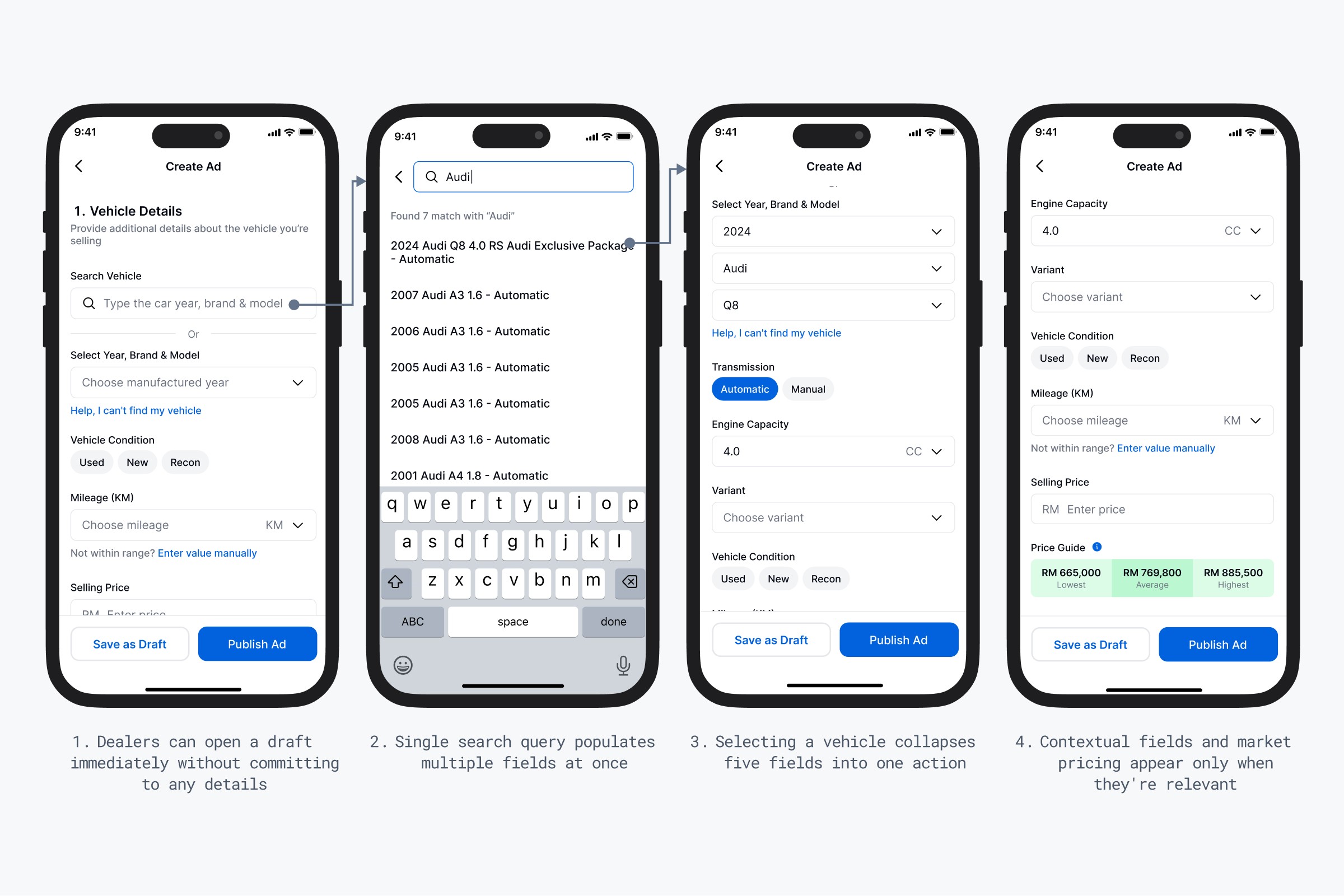
At the same time, the architecture was designed to support market-specific requirements without creating separate experiences for each country.
The result was a workflow that felt recognisable to existing users while better supporting on-the-go usage.
2/3 · Designing Around Dealer Mental Models
Research revealed a disconnect between how the product measured performance and how dealers actually evaluated success.
Dealers rarely talked about impressions or engagement metrics. Instead, they cared about whether a listing was attracting interest and how visible it was to buyers.
We initially explored surfacing listing position directly, but API limitations made this impossible.
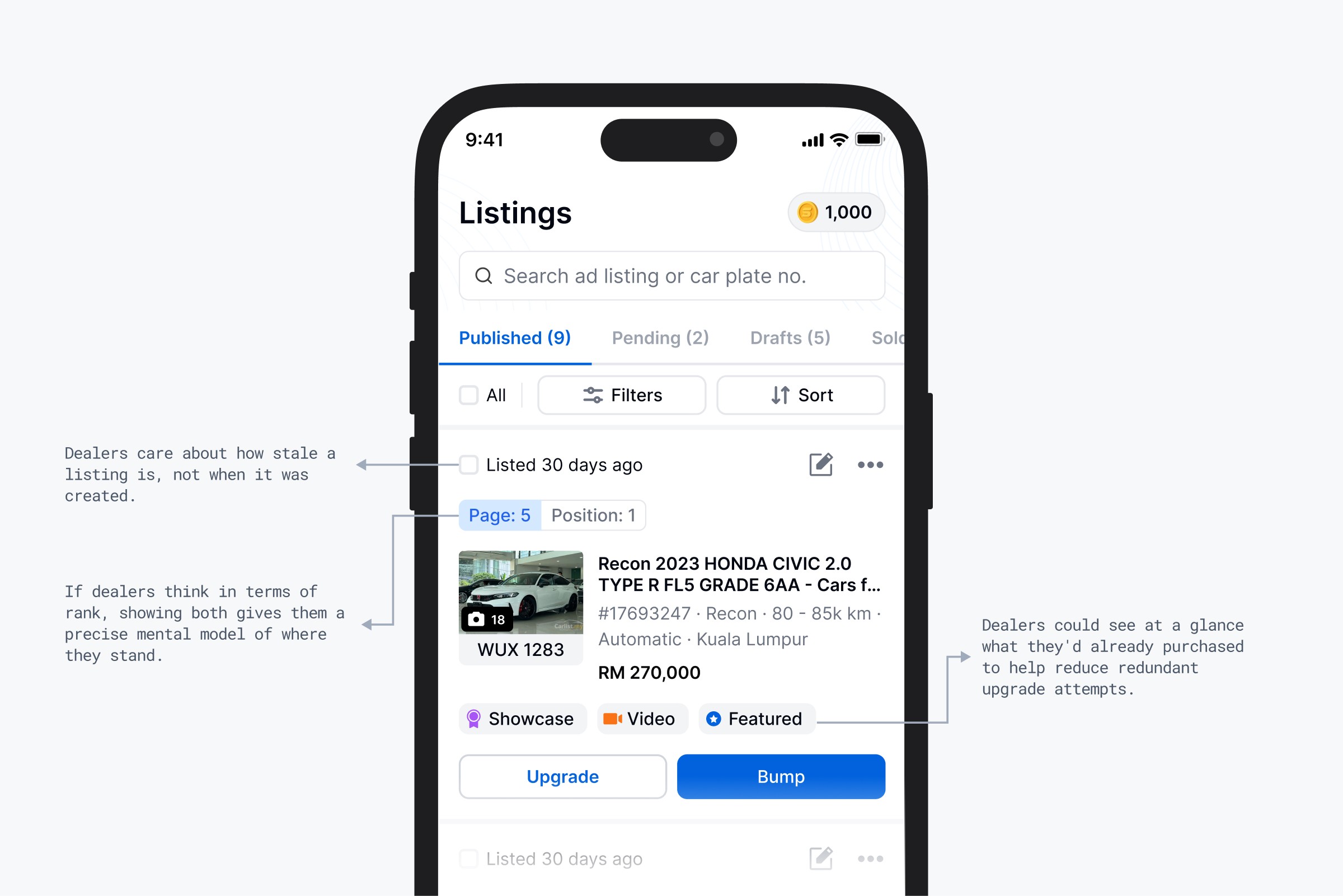
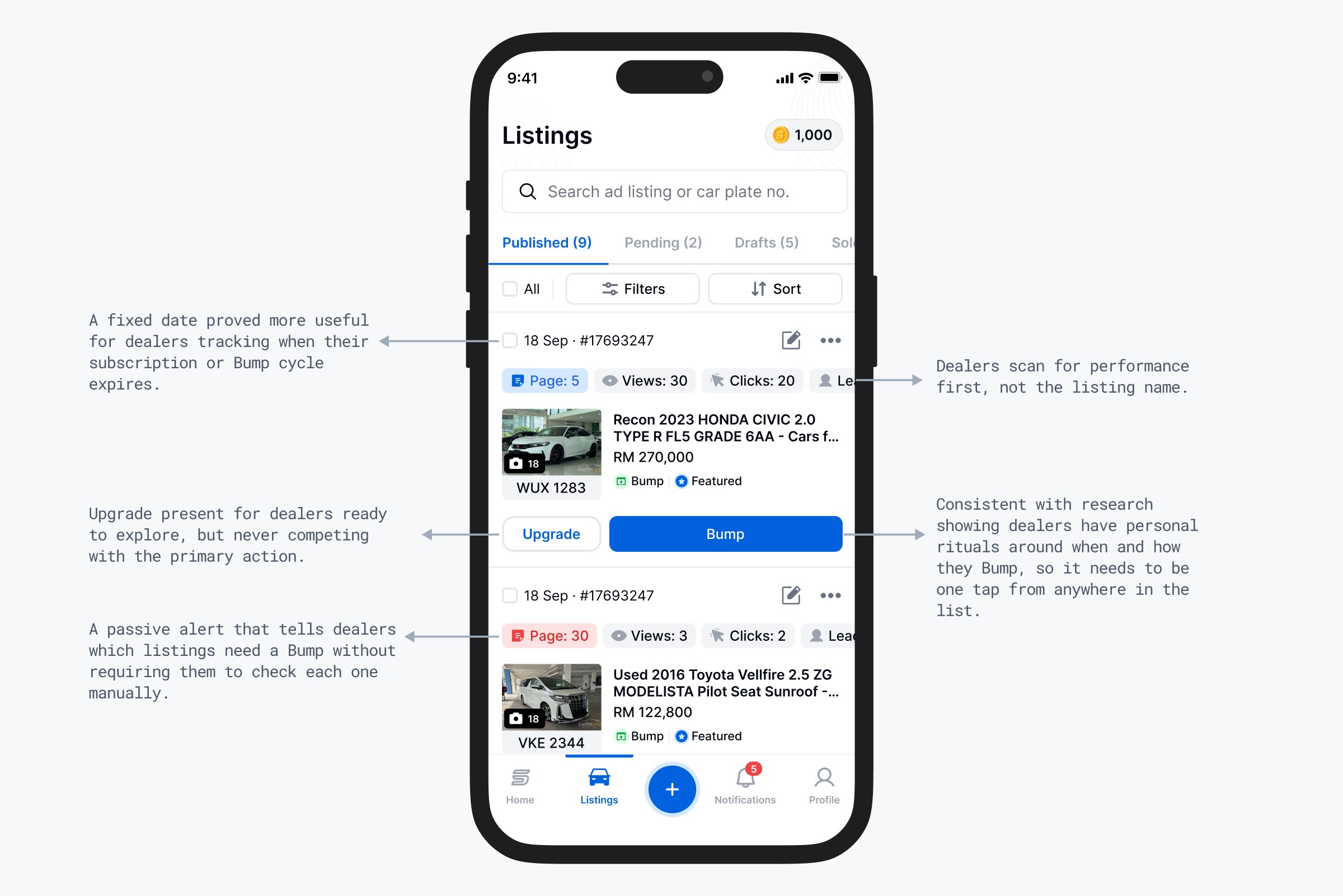
Rather than forcing dealers toward unfamiliar metrics, I redesigned the experience around the signals they already trusted.
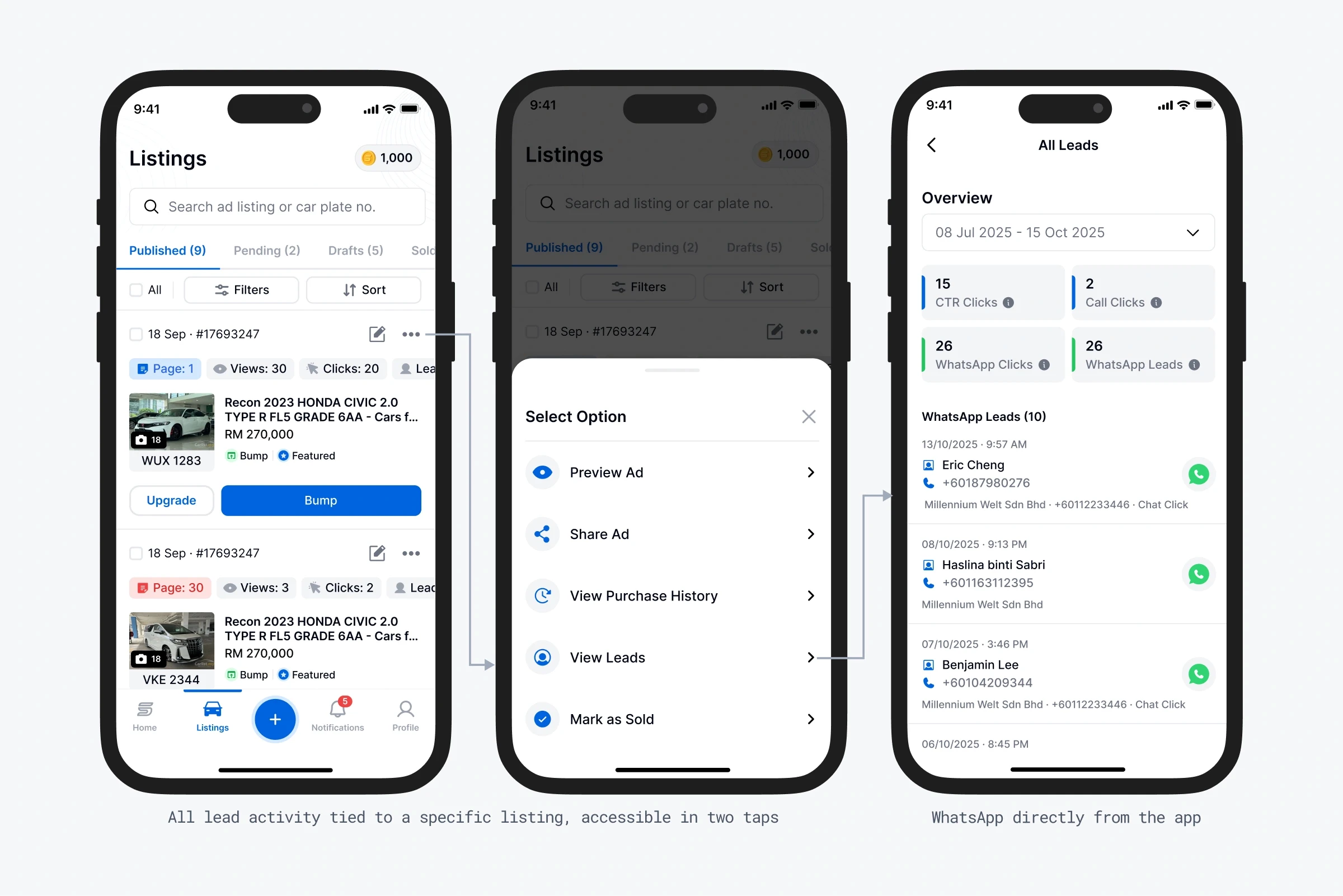
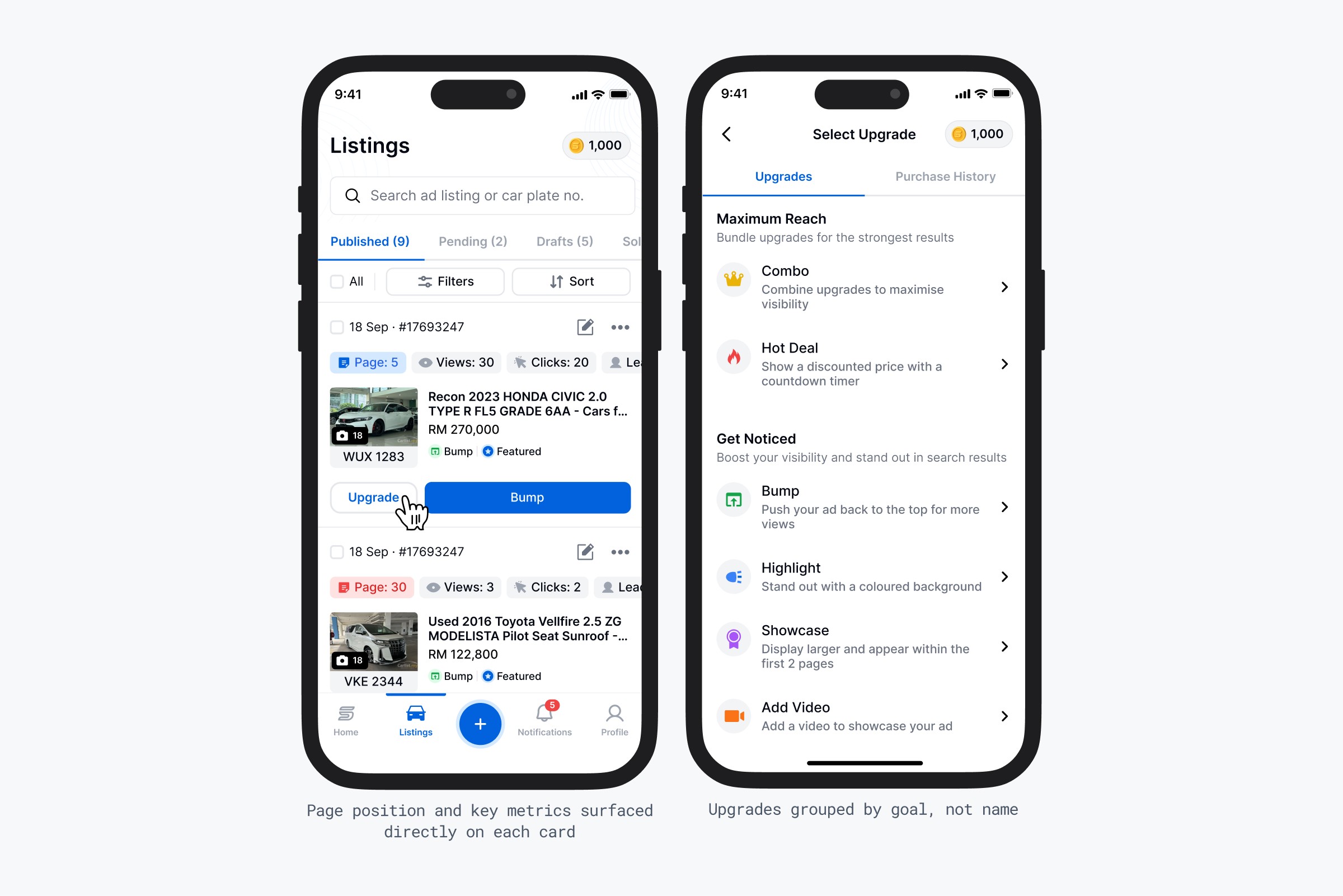
Performance indicators became more actionable, lead management was restructured around individual listings, and direct WhatsApp actions reduced the friction between reviewing an enquiry and contacting a buyer.
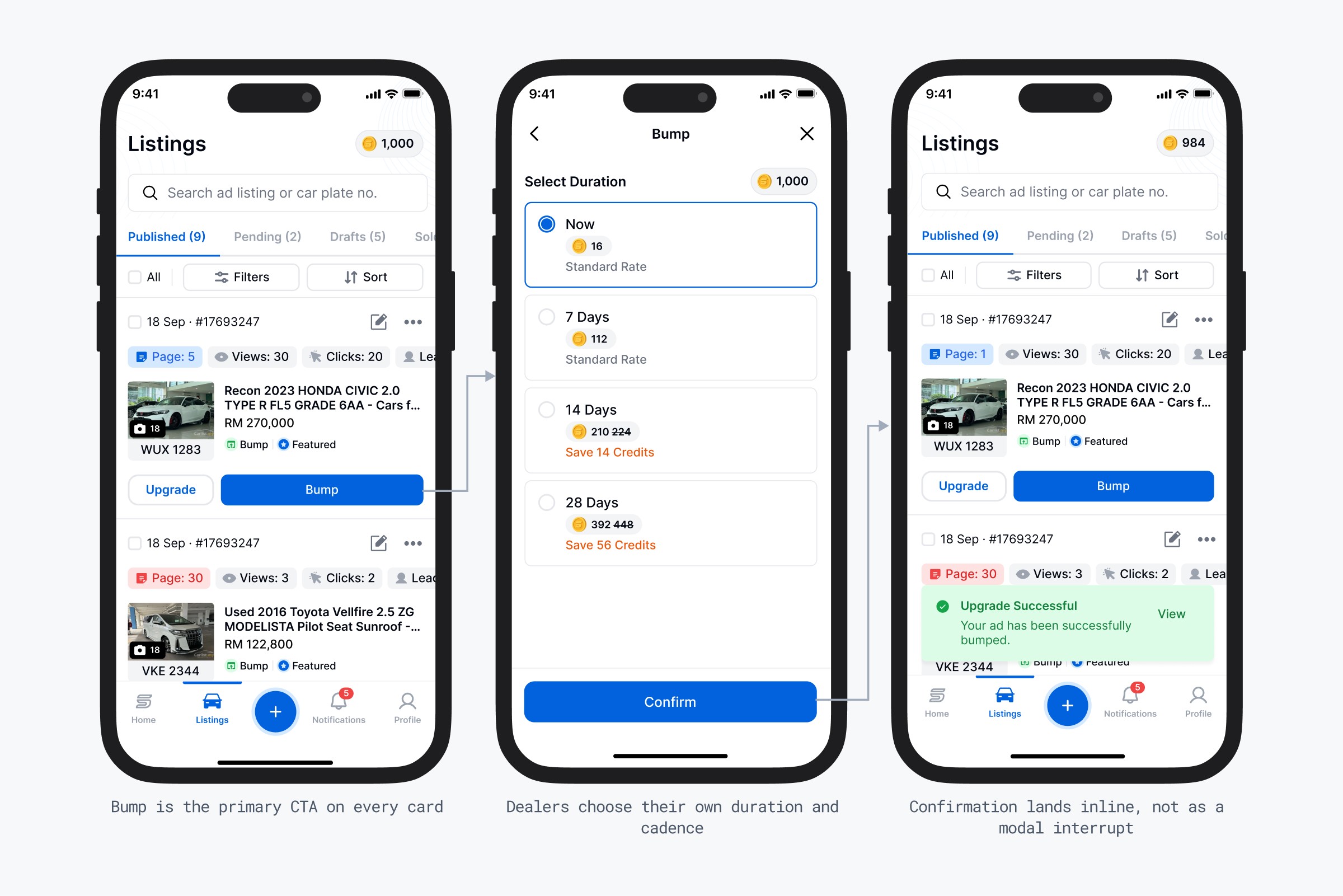
The same principle shaped monetisation.
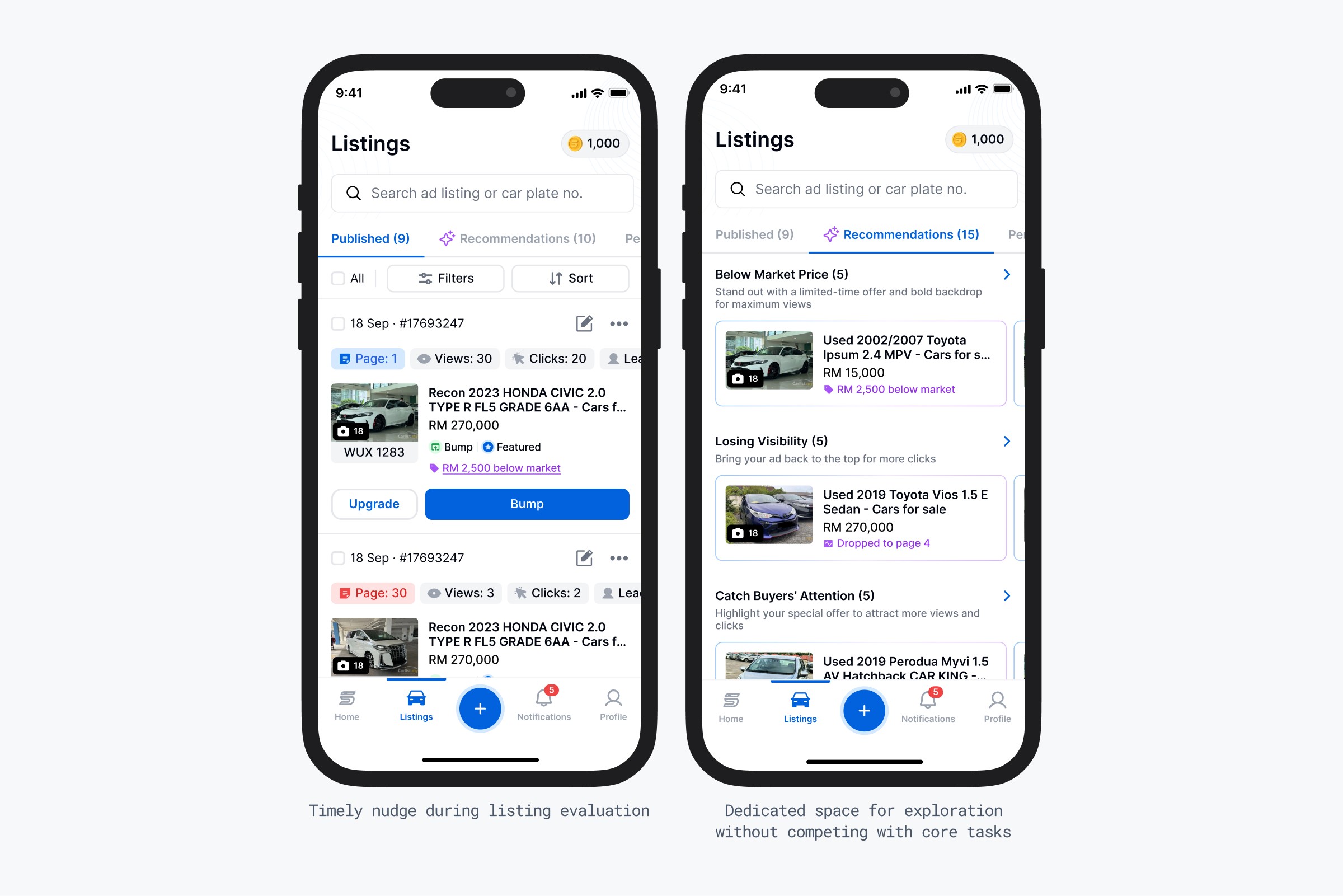
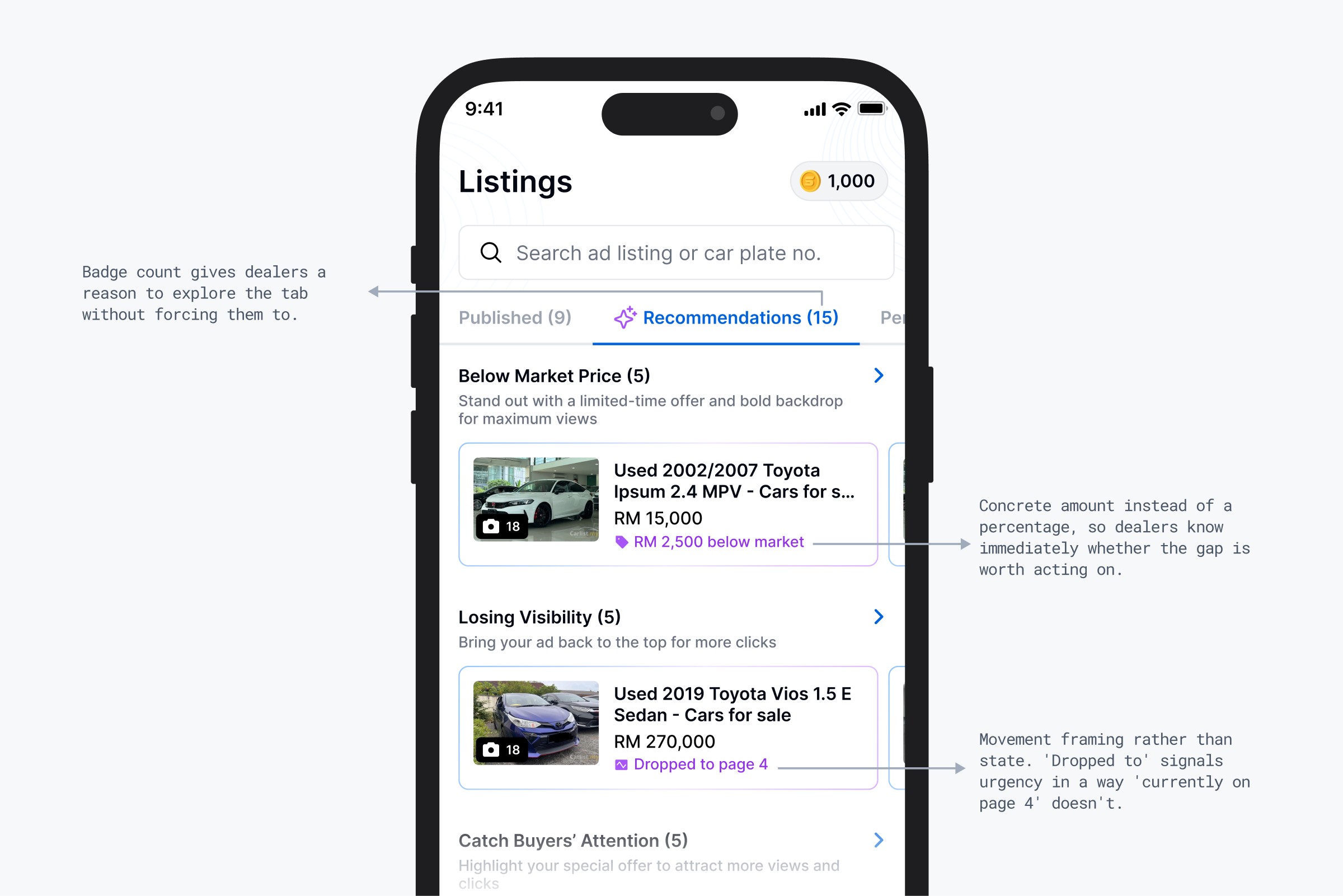
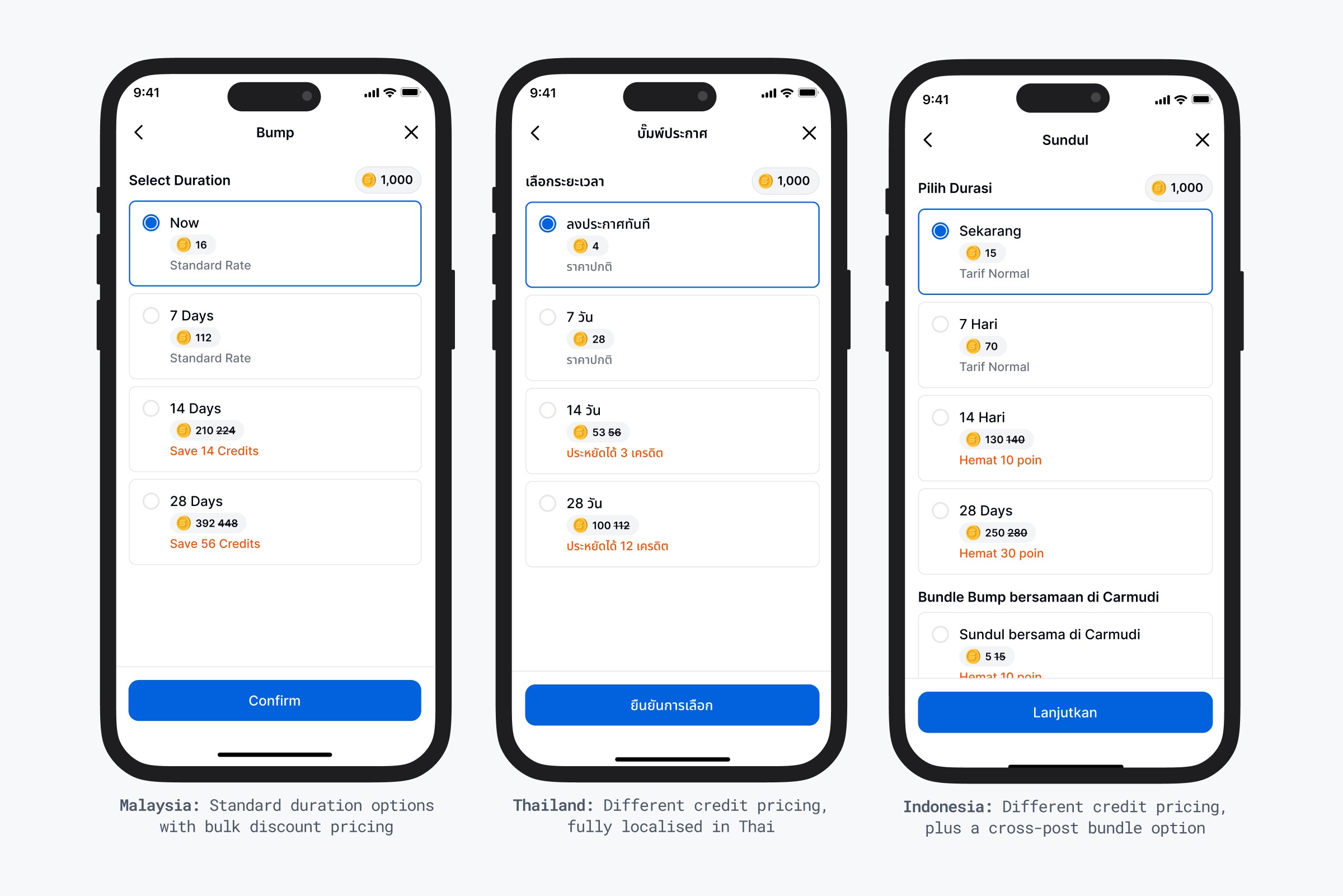
Instead of presenting ad upgrades as product names, I reorganised them around dealer goal: Maximum Reach and Get Noticed, and repositioned recommendations to moments when dealers were already evaluating listing performance, making them more relevant and actionable.

Research also uncovered inefficiencies dealers rarely mentioned explicitly.
During dealership visits, I observed sales agents repeatedly copying content from old listings to create new ones. This insight led to a listing duplication feature that eliminated a workaround many had come to accept as part of their workflow.
3/3 · Scaling Across 3 Markets Without Building 3 Products
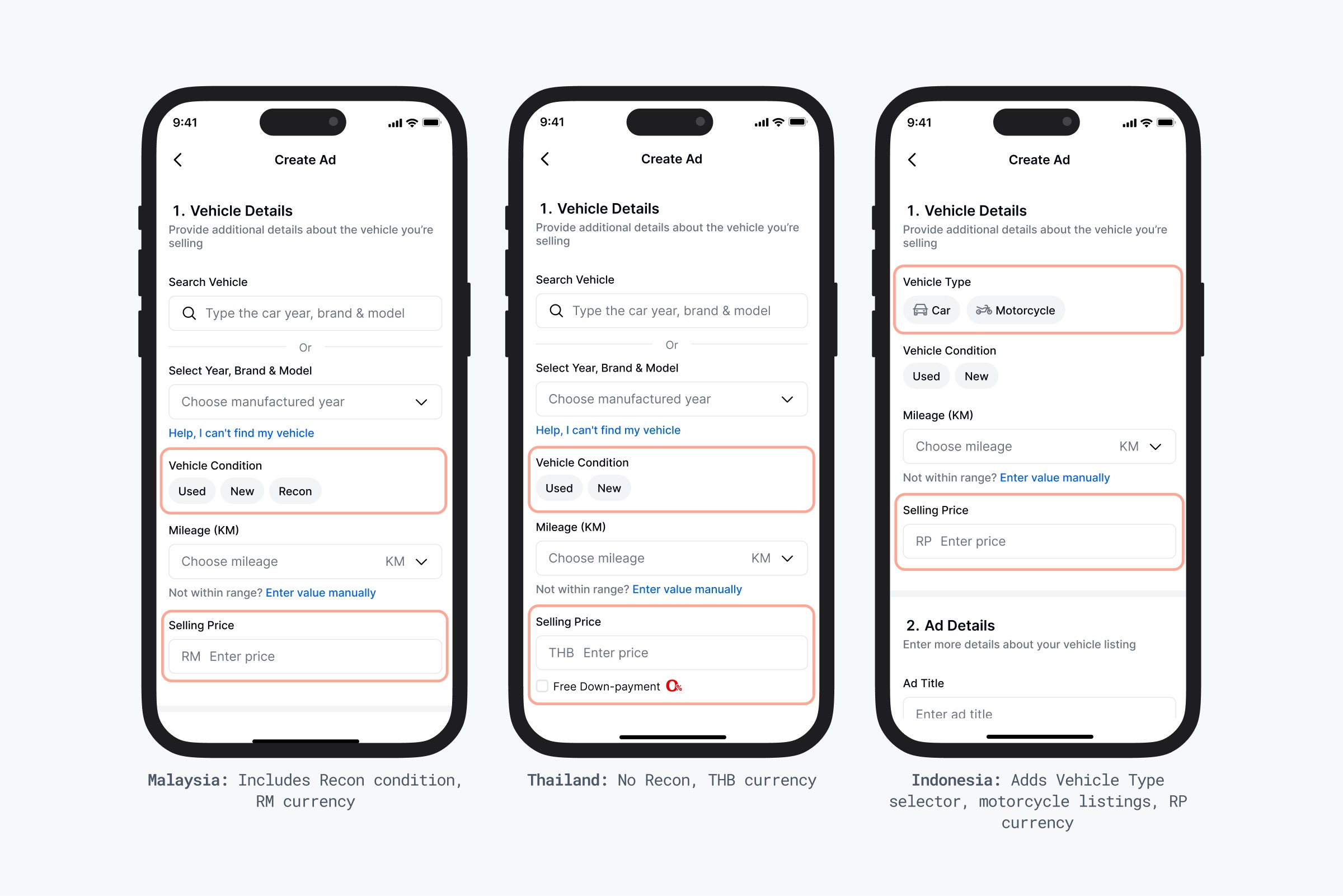
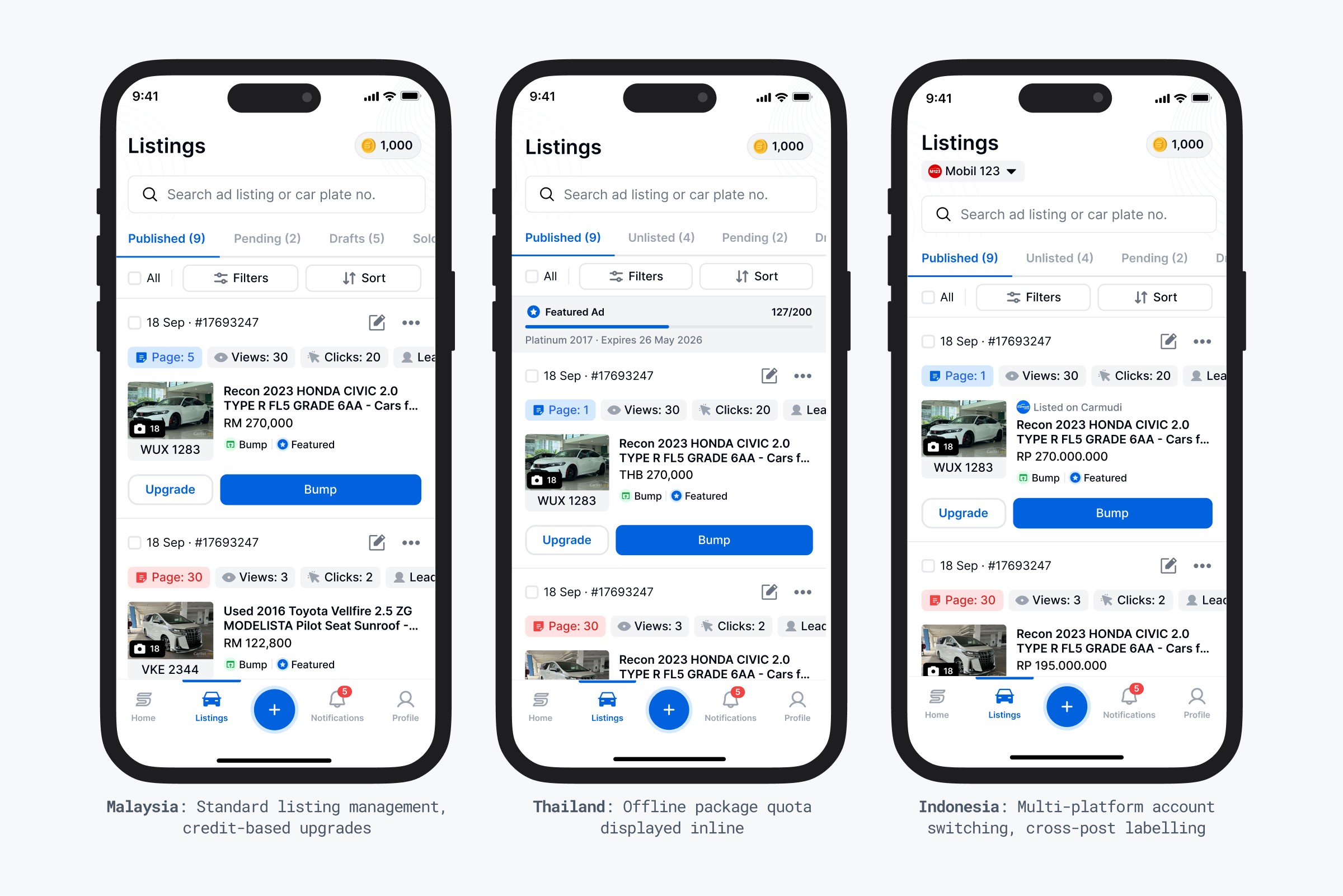
The project needed to launch across Malaysia, Indonesia, and Thailand within 4 months, each with different business models, currencies, and platform requirements.
Rather than designing separate experiences, I worked with the team to establish a modular framework that allowed market-specific requirements to be configured without changing the underlying workflow. This created a scalable foundation that balanced localisation needs with a consistent user experience.
IMPACT
6,500+
Ad Upgrade Purchases
609
Downloads
~160
Daily Active Users
The most meaningful outcome was ad upgrade adoption. Before launch, dealers overwhelmingly relied on Bump while many other monetisation products saw limited engagement. The volume of upgrade purchases suggested that restructuring and simplifying the experience helped dealers discover and act on products they had previously overlooked. More broadly, the launch validated mobile as a meaningful revenue channel rather than simply a companion to the web platform.
REFLECTION
01: Observation reveals what interviews miss
One of the most valuable features we shipped, listing duplication, came from observing dealer behaviour rather than direct feedback. The experience reinforced the importance of watching users in context rather than relying solely on interviews.
02: Technical constraints are product constraints
The project reinforced that successful products require flexibility in both research and implementation. Unexpected stakeholder perspectives and App Store constraints ultimately shaped the solution as much as the original design requirements.