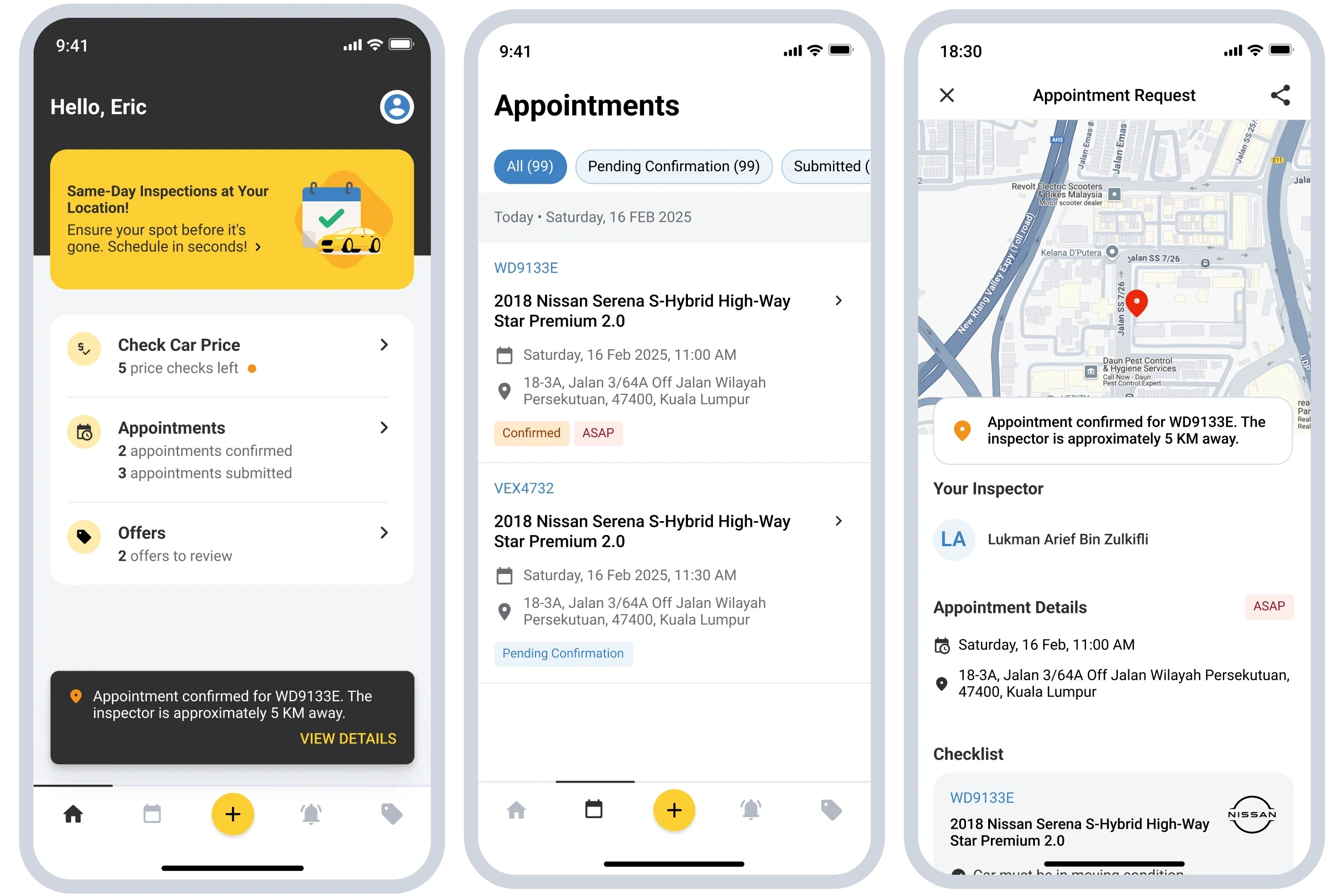
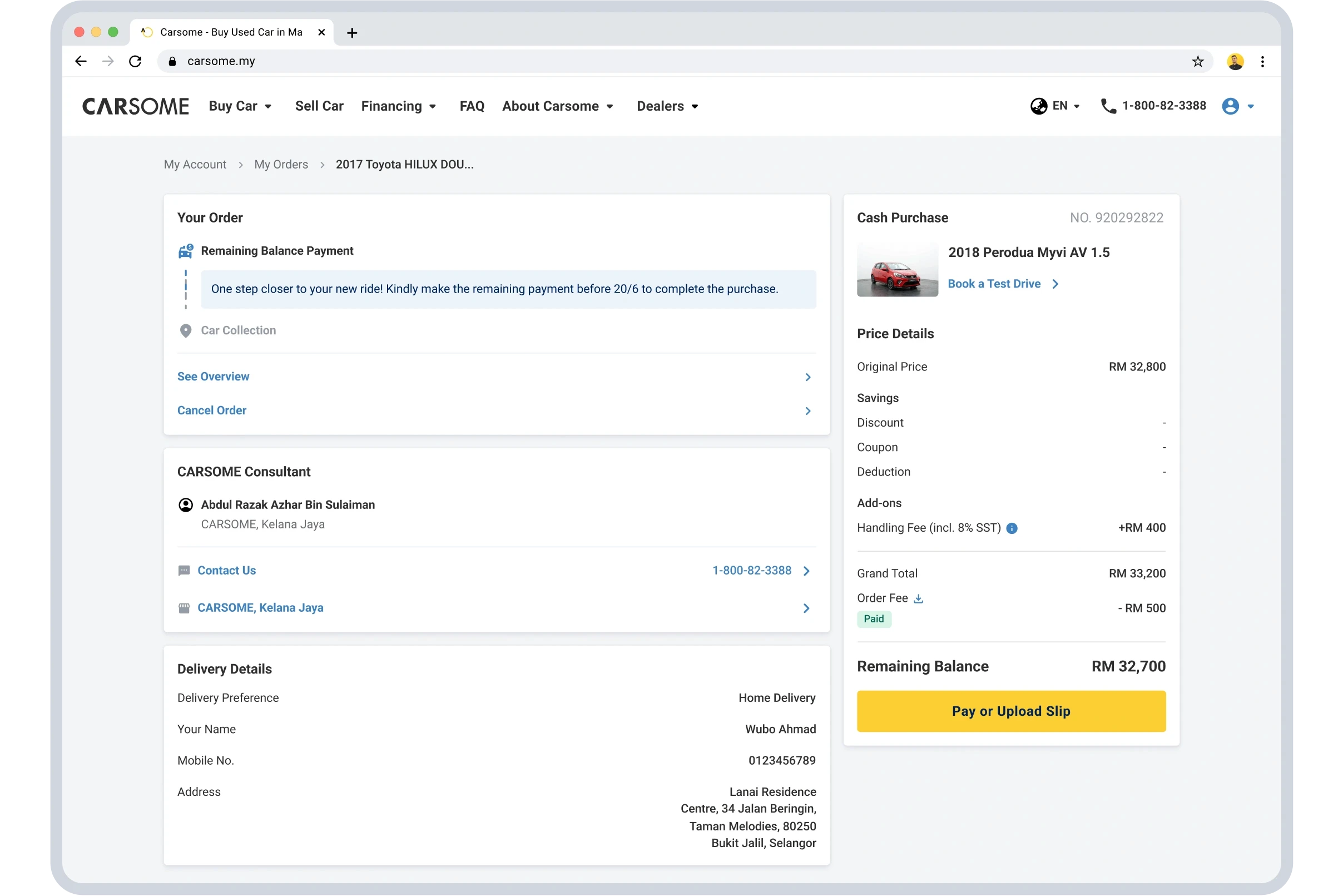
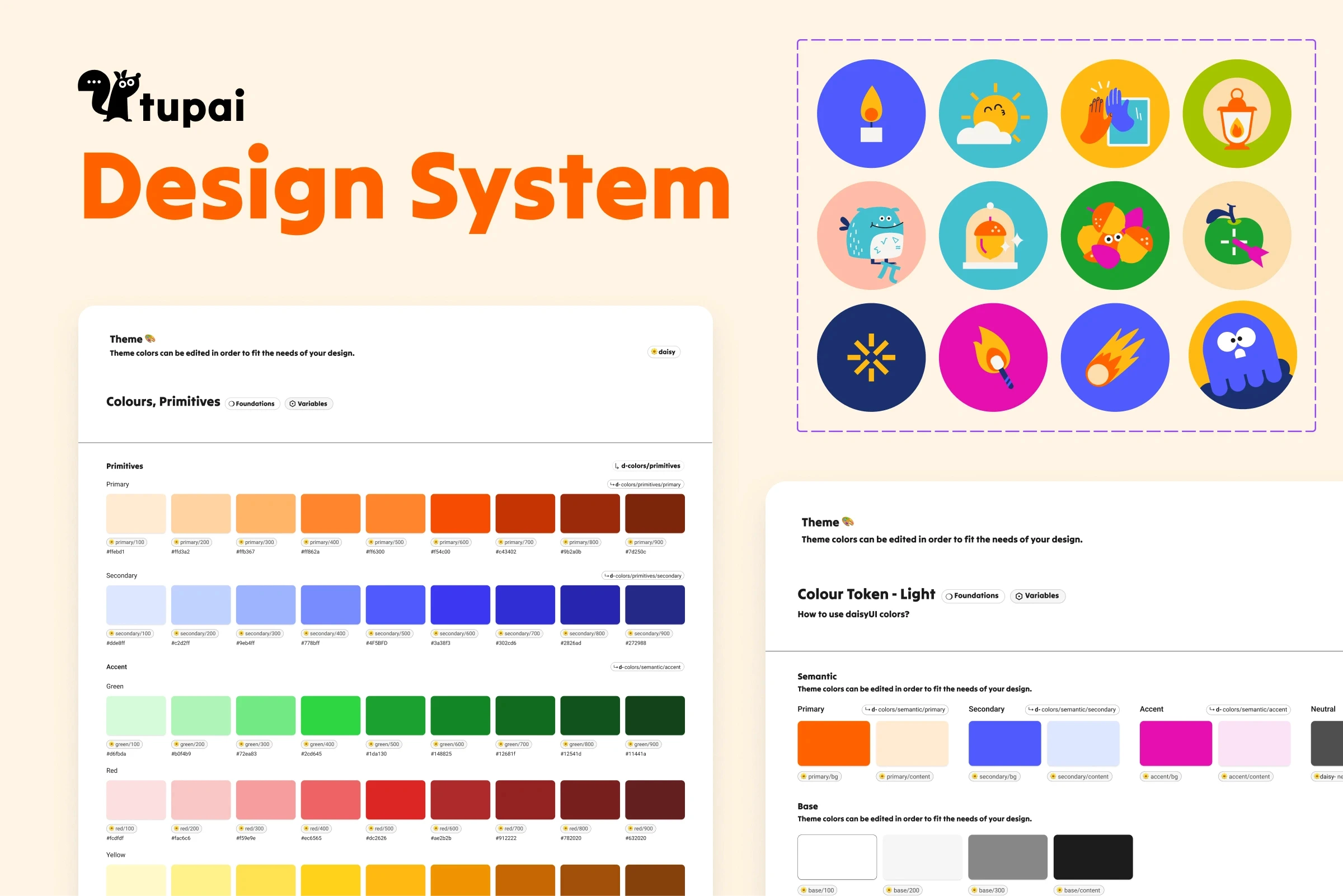
1/3 · Balancing Familiarity with Mobile-First Workflows
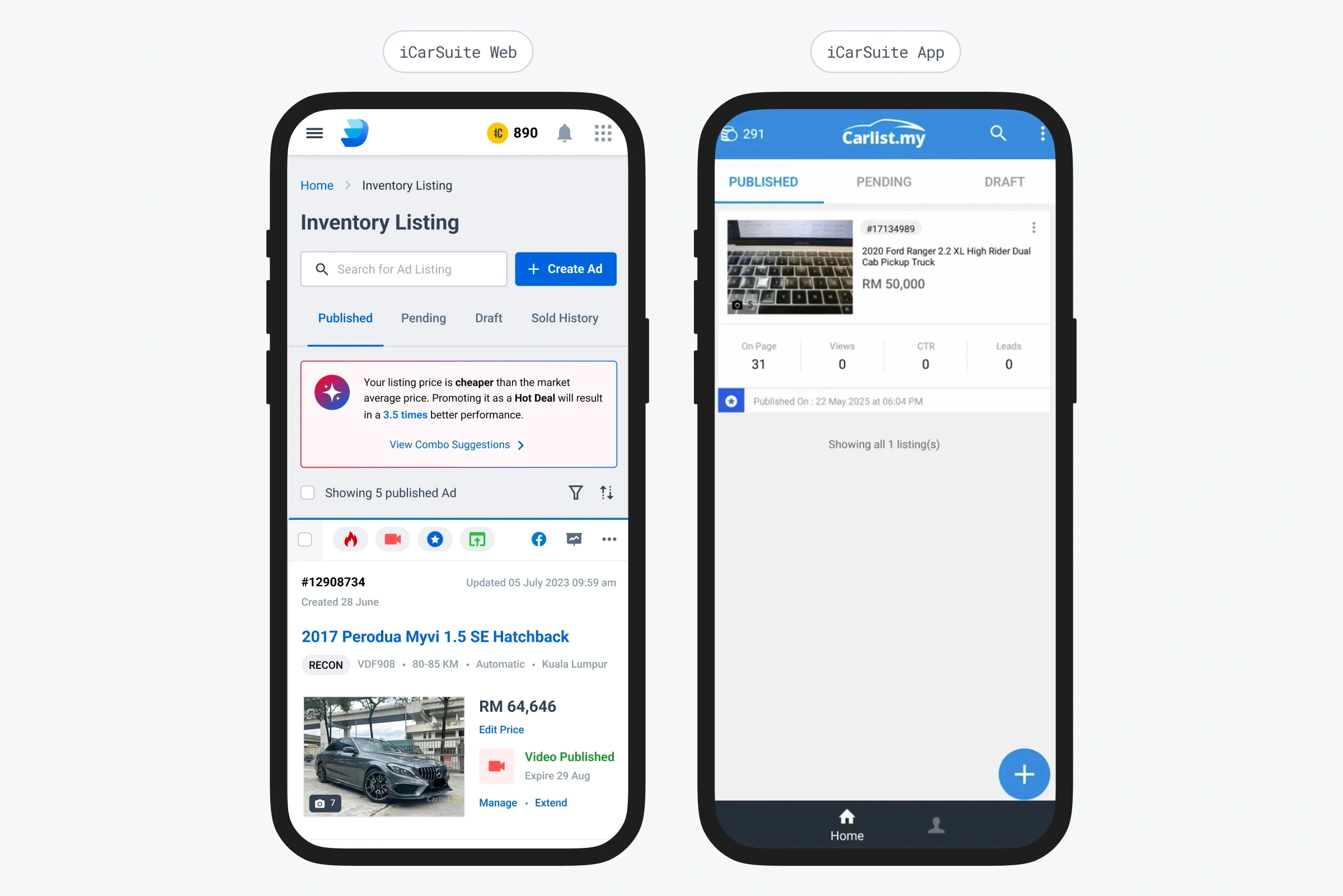
The mobile experience needed to feel familiar to existing users without inheriting the complexity of desktop workflows.

I redesigned the listing creation experience using progressive disclosure, allowing dealers to save drafts earlier and complete tasks in smaller steps.
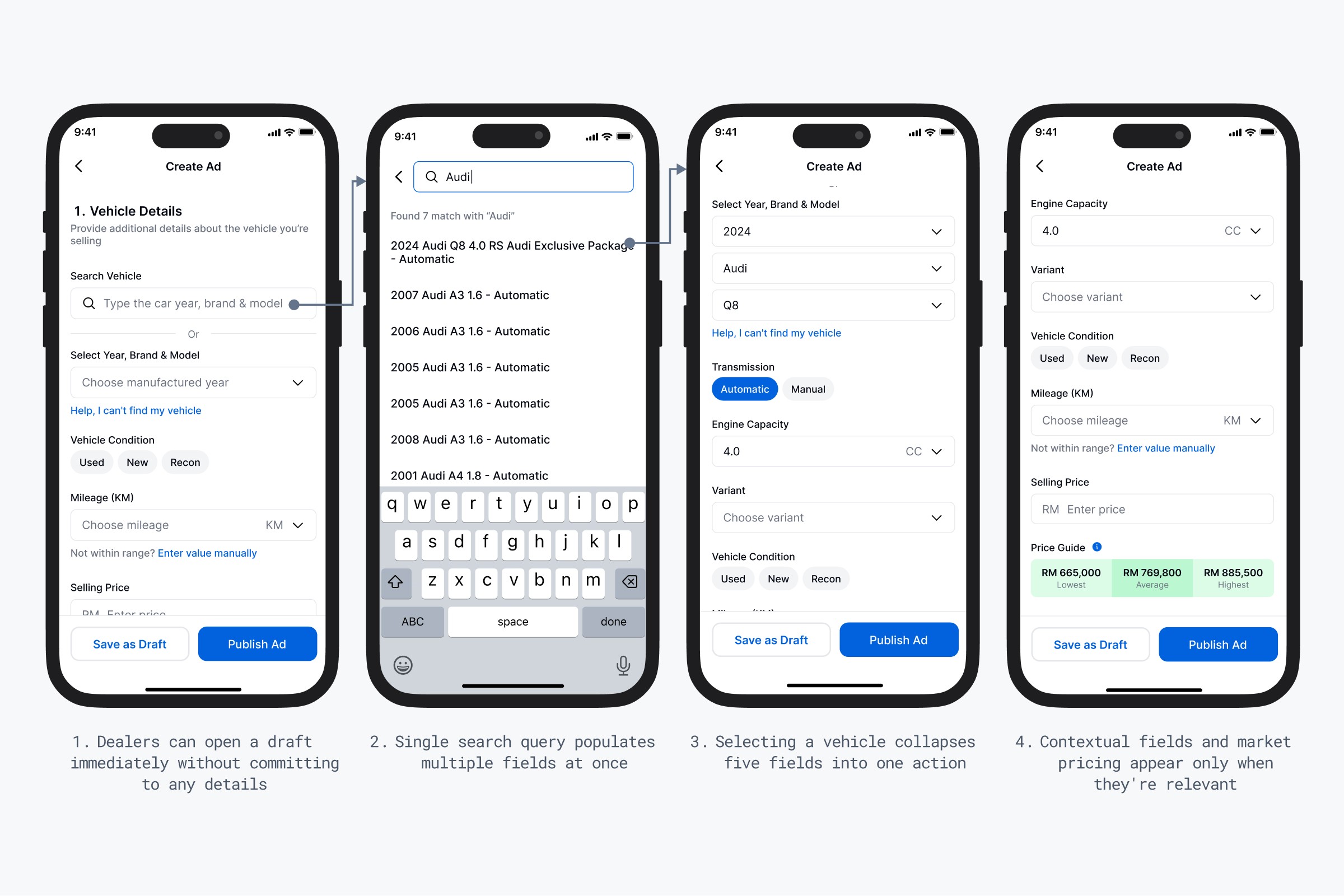
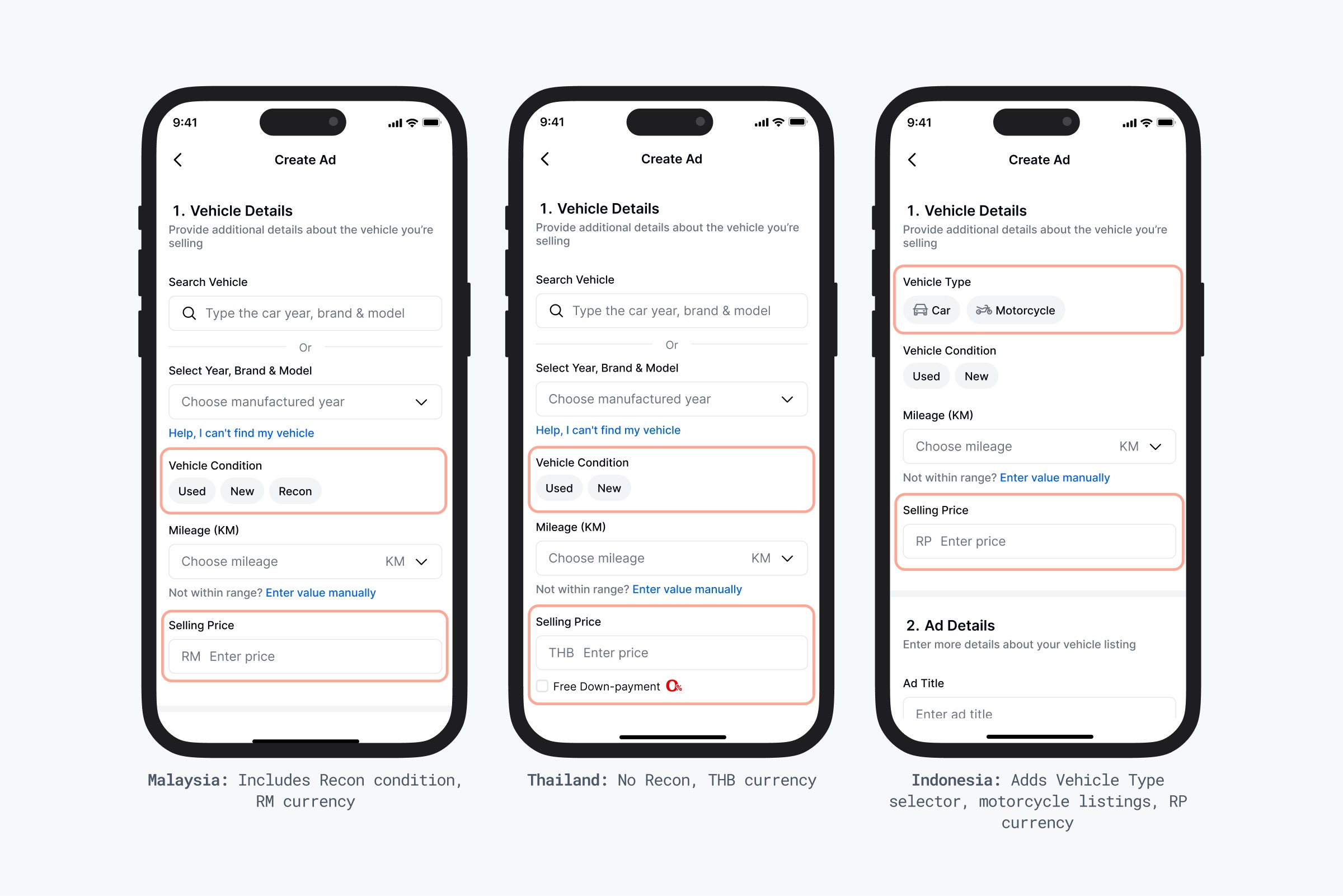
At the same time, the architecture was designed to support market-specific requirements without creating separate experiences for each country. The result was a workflow that felt recognisable to existing users while better supporting on-the-go usage.
2/3 · Designing Around Dealer Mental Models
Research revealed a disconnect between how the product measured performance and how dealers actually evaluated success. Dealers rarely talked about impressions or engagement metrics. Instead, they cared about whether a listing was attracting interest and how visible it was to buyers. We initially explored surfacing listing position directly, but API limitations made this impossible.
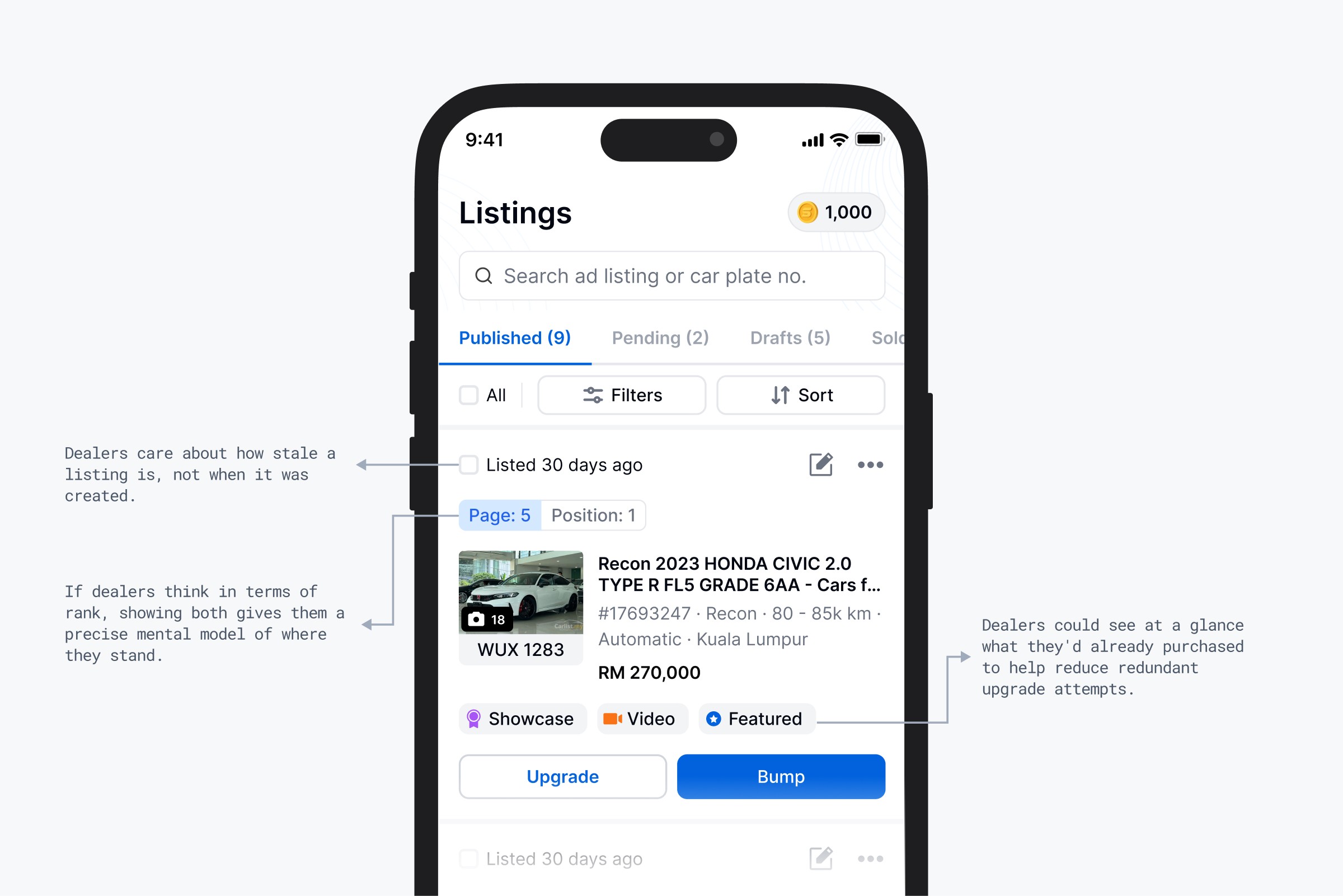
Rather than forcing dealers toward unfamiliar metrics, I redesigned the experience around the signals they already trusted. Performance indicators became more actionable, lead management was restructured around individual listings, and direct WhatsApp actions reduced the friction between reviewing an enquiry and contacting a buyer.
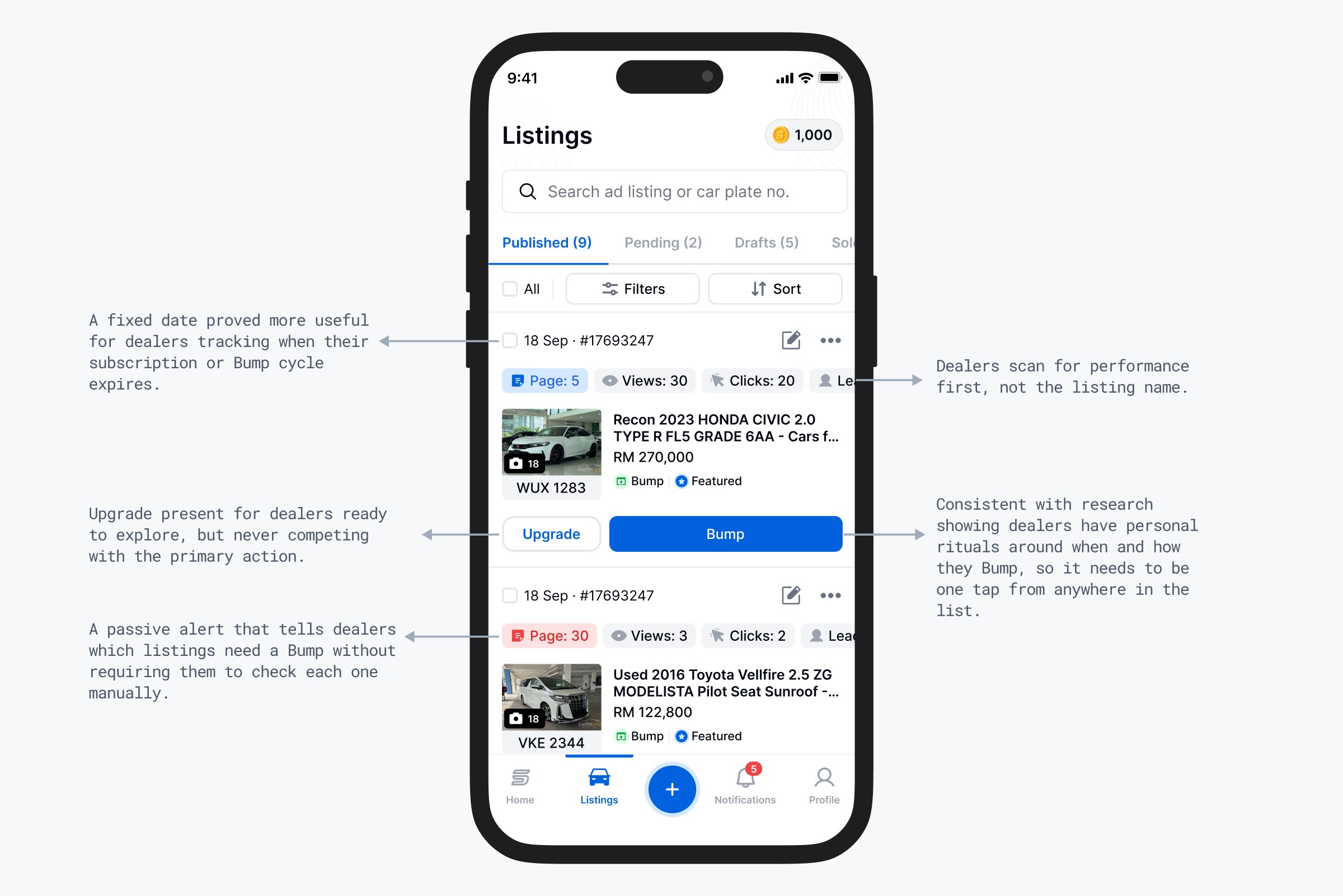
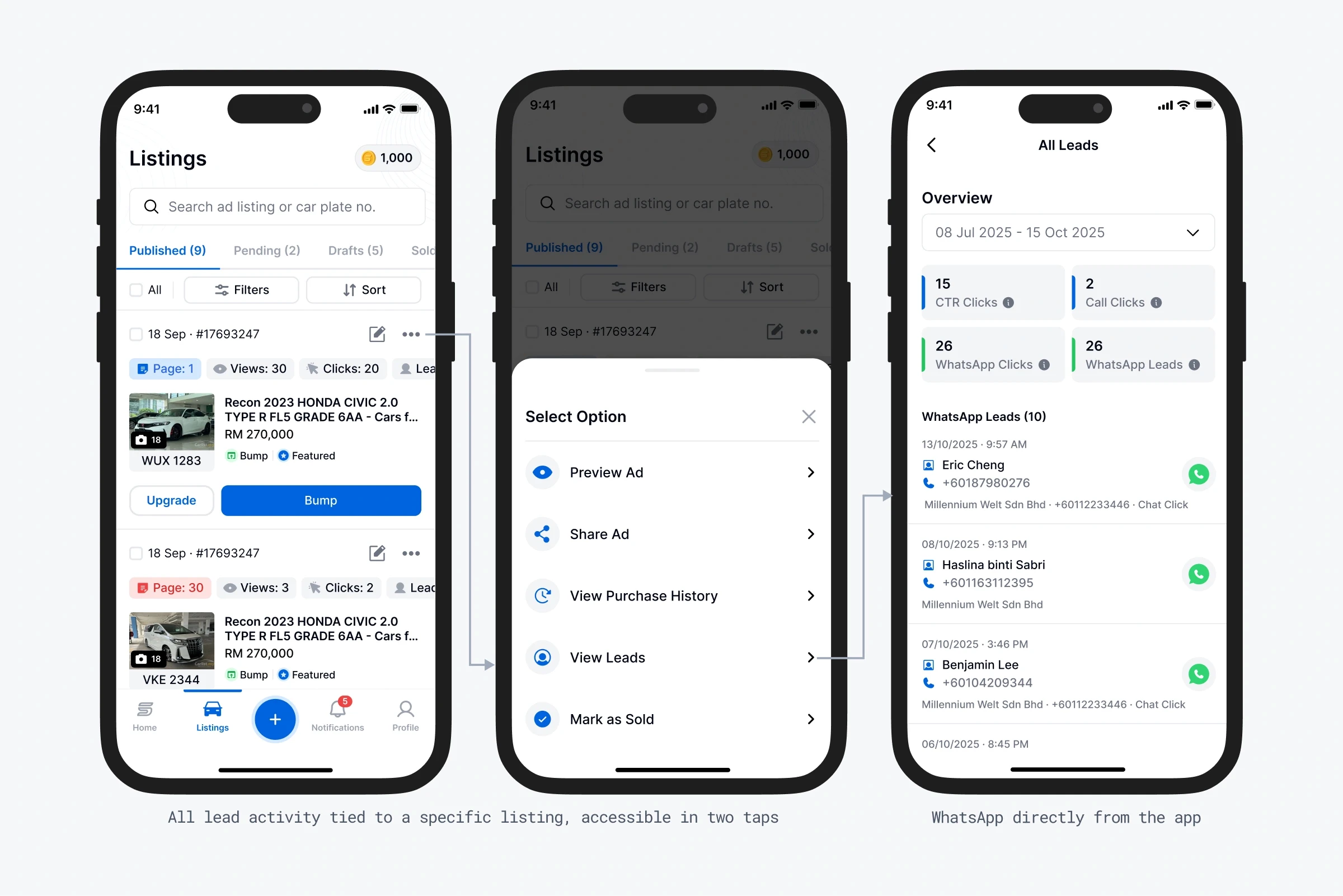
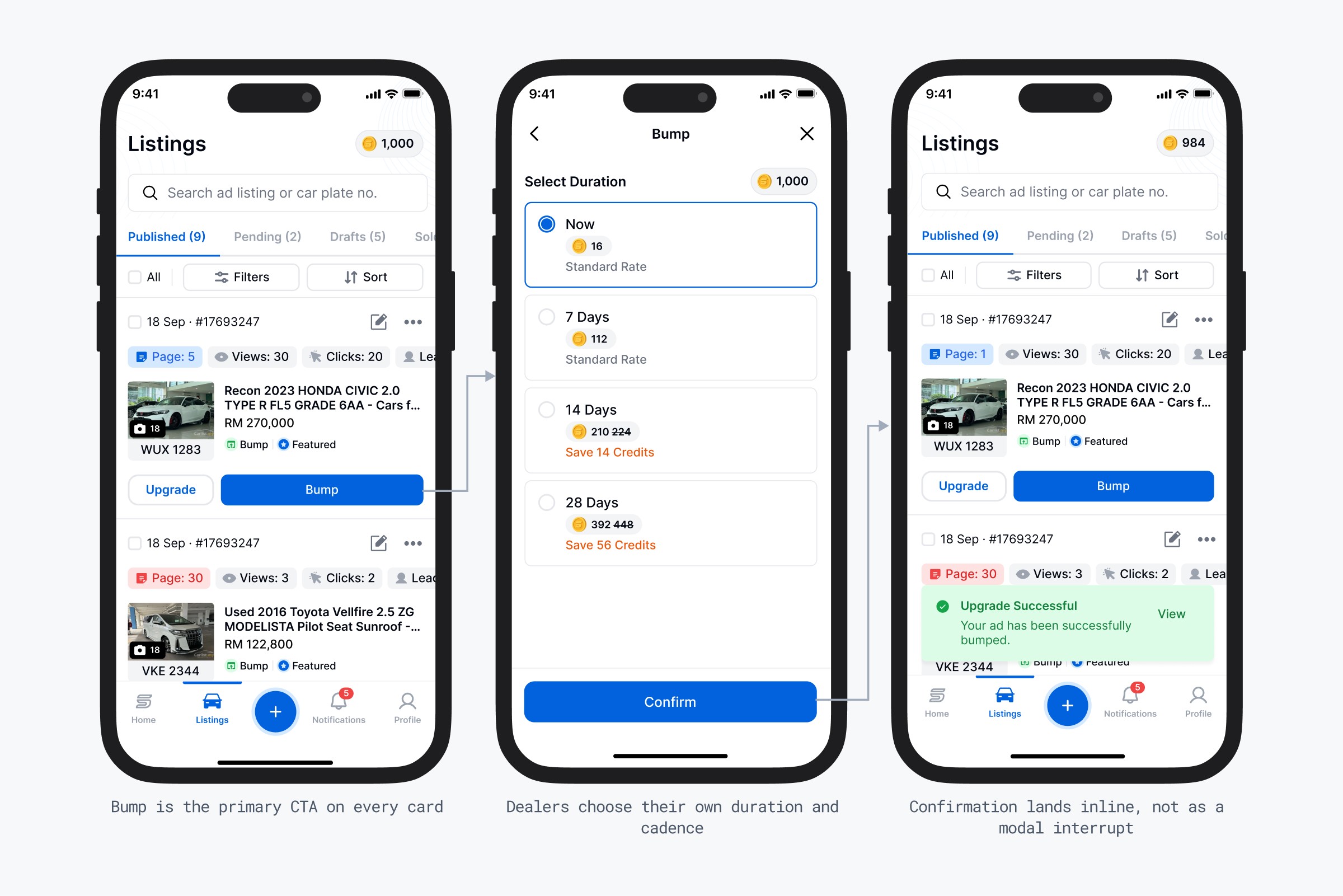
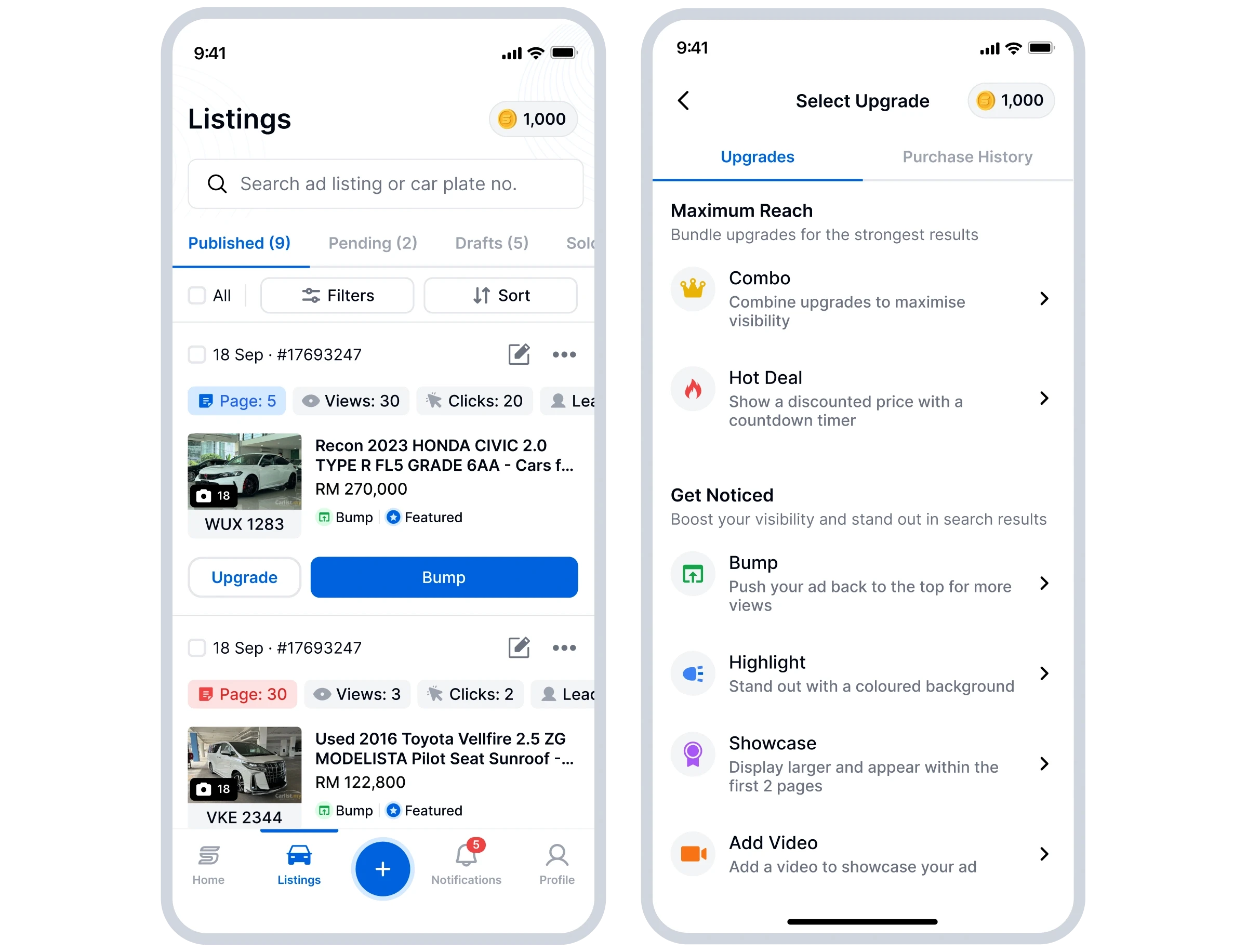
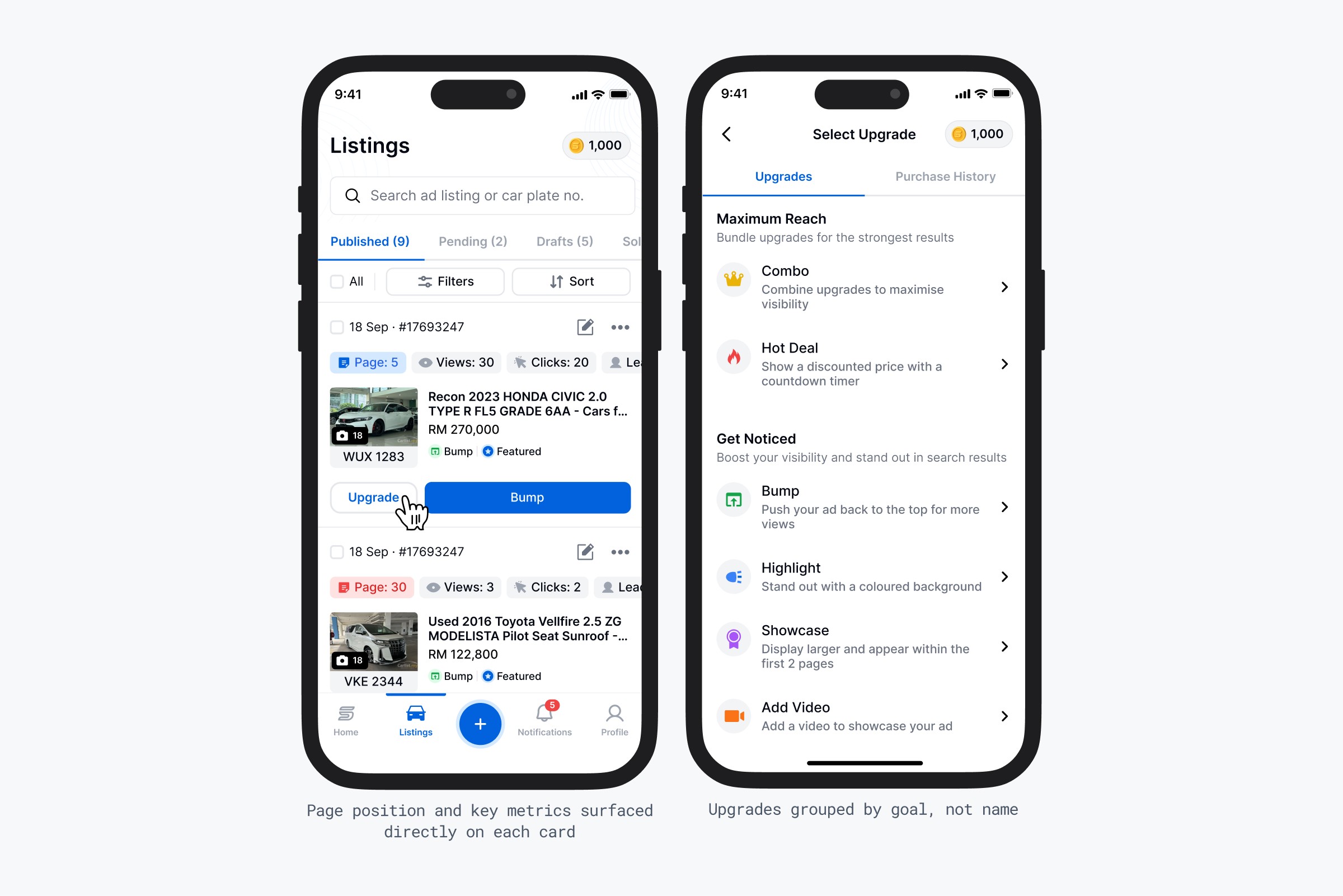
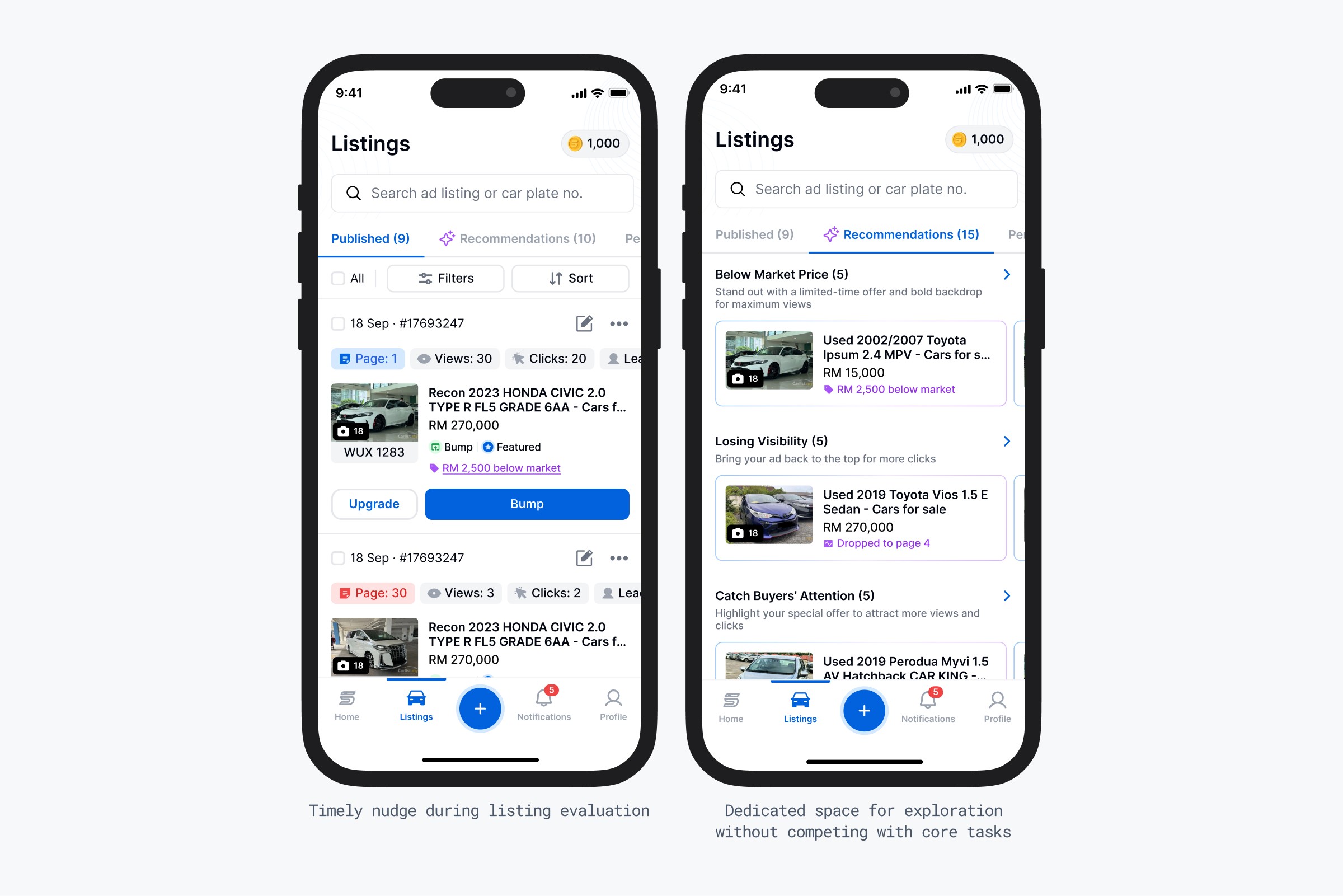
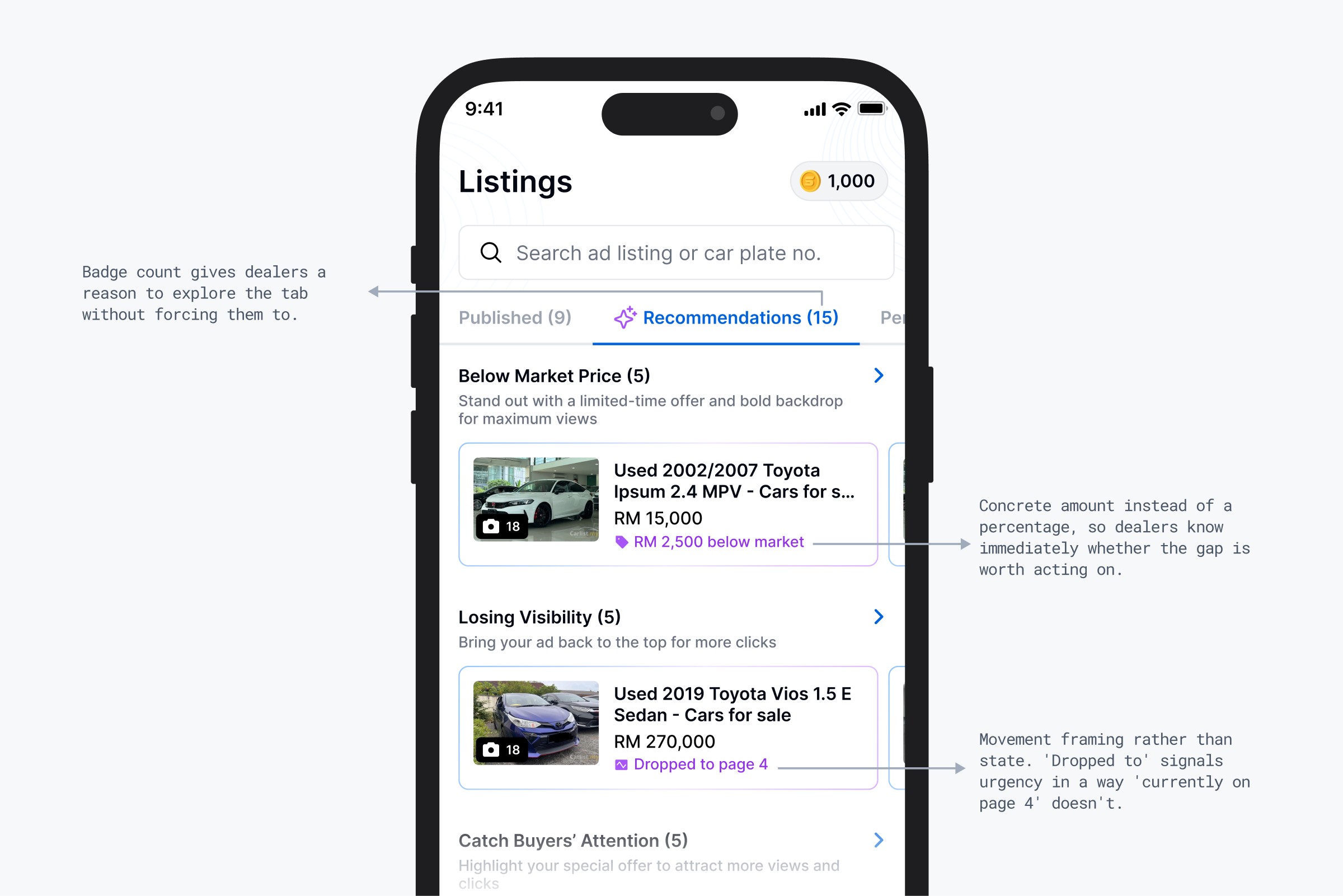
The same principle shaped monetisation. Instead of presenting ad upgrades as product names, I reorganised them around dealer goal: Maximum Reach and Get Noticed, and repositioned recommendations to moments when dealers were already evaluating listing performance, making them more relevant and actionable.

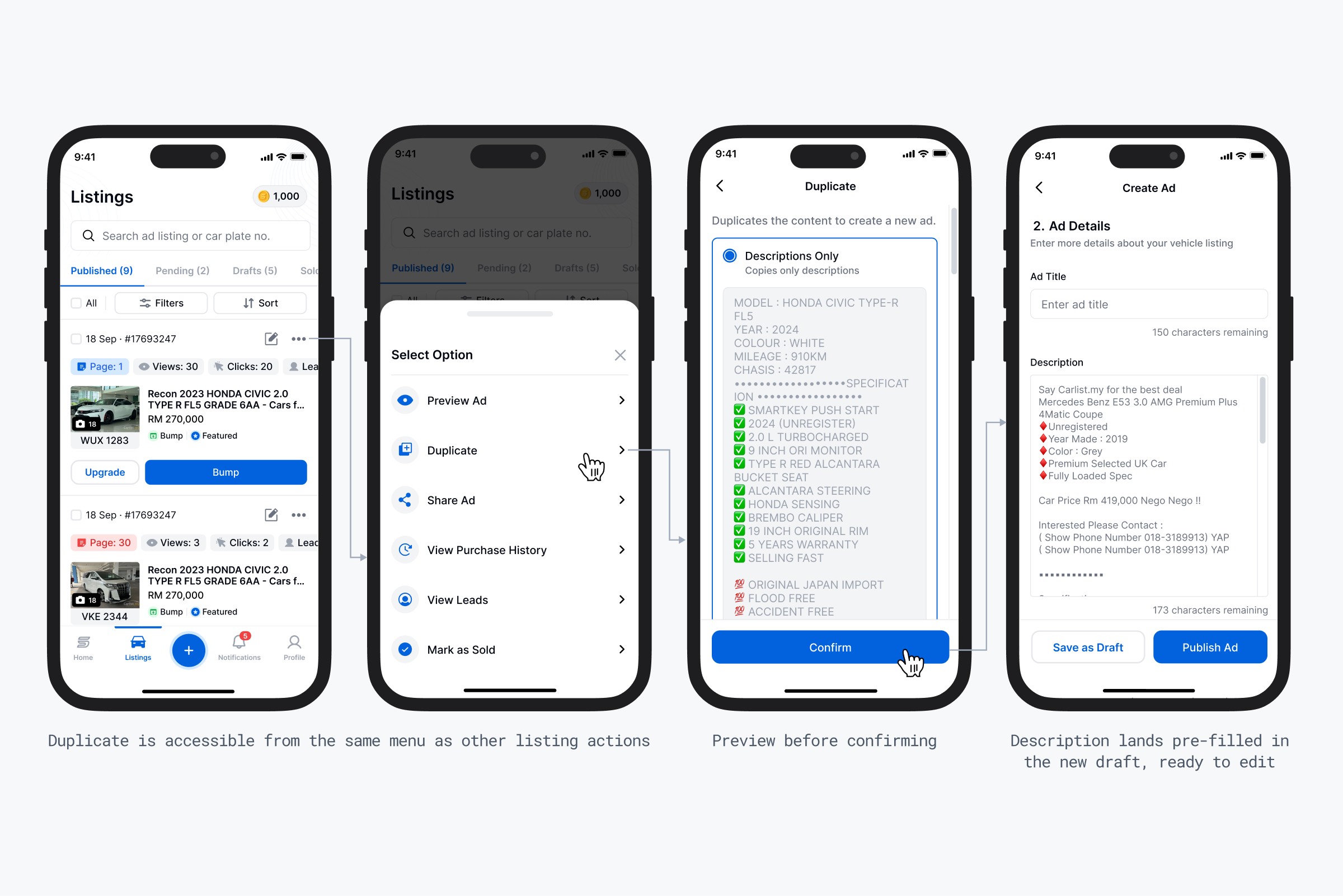
Research also uncovered inefficiencies dealers rarely mentioned explicitly. During dealership visits, I observed sales agents repeatedly copying content from old listings to create new ones. This insight led to a listing duplication feature that eliminated a workaround many had come to accept as part of their workflow.
3/3 · Scaling Across 3 Markets Without Building 3 Products
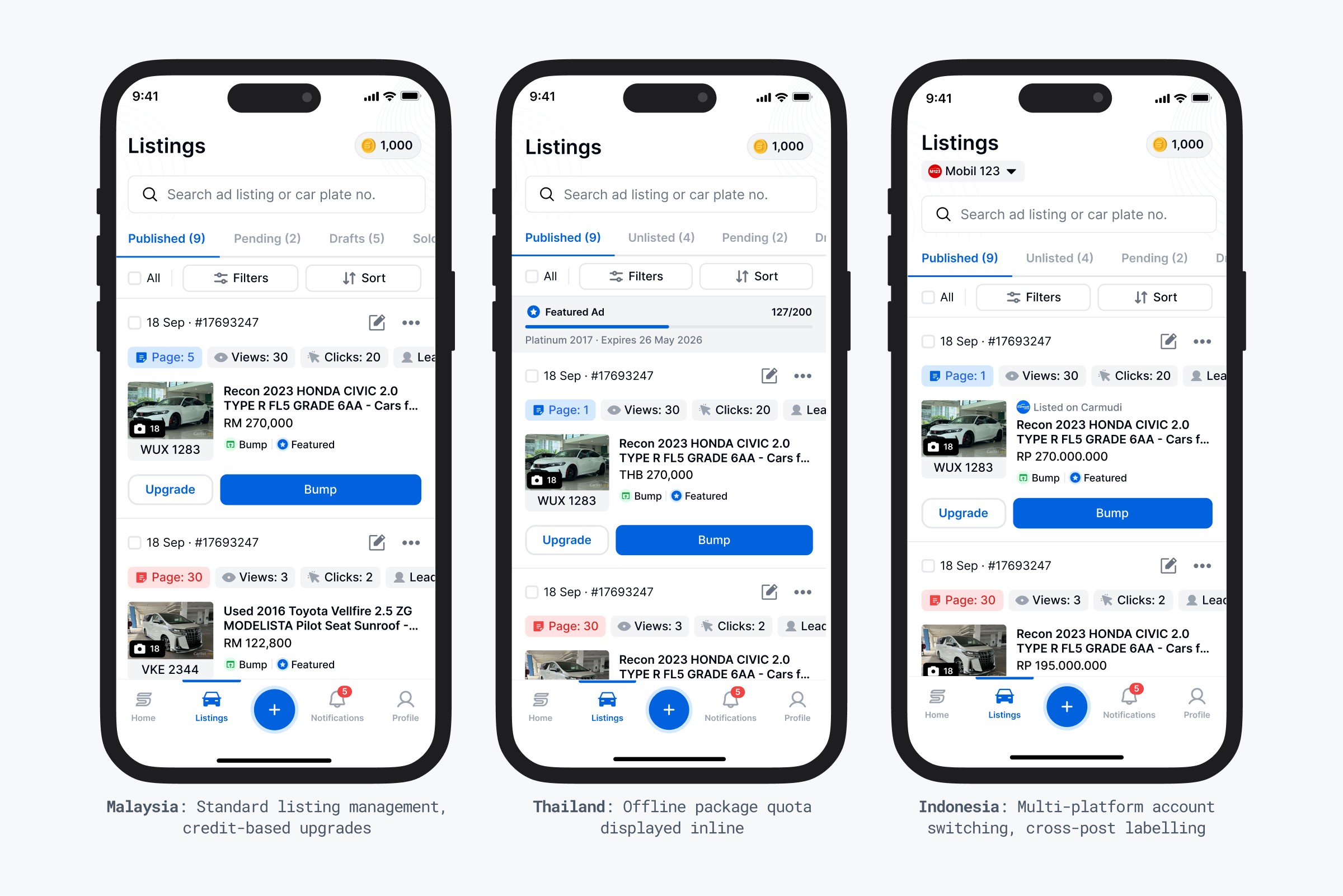
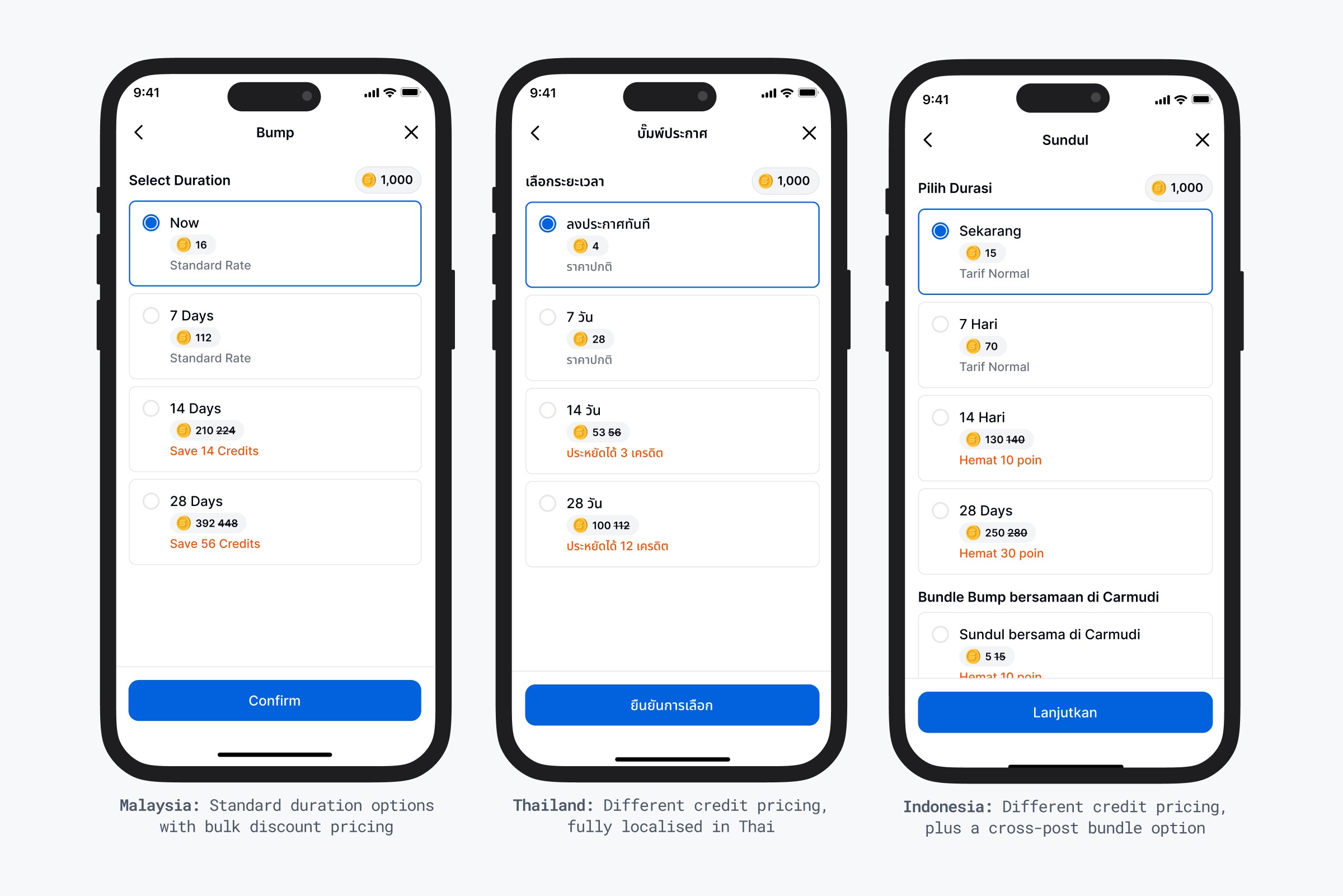
The project needed to launch across Malaysia, Indonesia, and Thailand within 4 months, each with different business models, currencies, and platform requirements. Rather than designing separate experiences, I worked with the team to establish a modular framework that allowed market-specific requirements to be configured without changing the underlying workflow. This created a scalable foundation that balanced localisation needs with a consistent user experience.